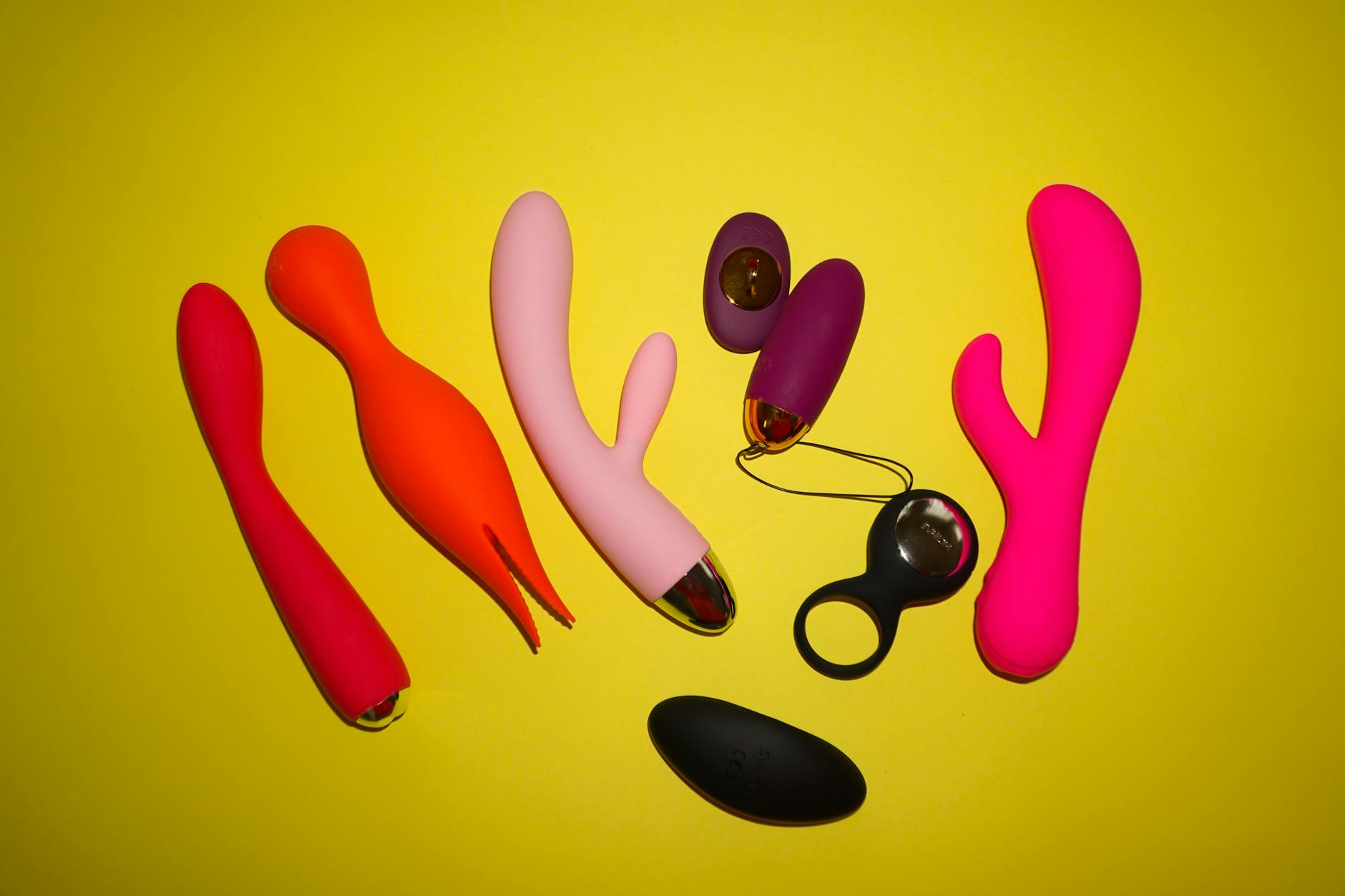
Here's what most people get wrong about intensity
You're supposed to think intensity is just volume. More buzzing equals more sensation equals faster pleasure. But that's not how your nervous system actually works. Intensity changes how fast your arousal builds and where you peak, but it doesn't automatically speed up the journey. Sometimes high intensity gets you there faster. Sometimes it stalls you completely. And sometimes it changes what "there" even means.
I've worked with hundreds of couples trying to sync their pleasure, and the intensity question comes up every single time. Usually it sounds like: "I need it at 6 to get anywhere, but my partner loses me at anything above 3." That's not a compatibility problem. It's a misunderstanding of what intensity is actually doing.
What intensity does to your arousal curve
Think of arousal like a ramp. It starts low, builds gradually, and peaks. Intensity doesn't lengthen or shorten the ramp. It changes the angle of it. High intensity is a steeper angle. You climb faster. Low intensity is a gentler slope. You climb slower but sometimes steadier.
Here's the neurological part: your clitoris has about 8,000 nerve endings concentrated in a space the size of a pea. When stimulation starts, those nerves fire in a pattern. Low intensity fires them in a scattered, gentle rhythm. Medium intensity creates a denser firing pattern. High intensity triggers rapid, synchronized firing across clusters of nerves.
The faster the synchronized firing, the faster arousal can build. But here's the catch. If the intensity is too high too soon, your nerves adapt to it almost instantly. That's called habituation. Your body stops noticing the stimulus as much, and the arousal curve plateaus instead of climbing.
This is why so many people on lemon vibrators find that starting at pattern 1 or 2, then gradually increasing, works better than jumping straight to 5. You're letting your arousal build along with the intensity, not overwhelming your nervous system before the pleasure receptors are fully activated.
Intensity patterns vs. raw intensity
Most people think intensity means one thing: how strong the vibration is. But on lemon sexual toys like the Lem, intensity is actually two variables: the base strength and the pattern. Pattern changes the rhythm of that strength.
Pattern 1 might be a steady pulse. Pattern 3 could be a wave. Pattern 5 might be rapid pulses with micro-pauses. That rhythm change matters as much as the strength itself. Some brains respond better to steady stimulation. Others need variation to stay engaged. Some bodies orgasm faster with rhythmic patterns because the predictability lets your nervous system build anticipation.
The reason this matters: if you've always used a traditional vibrator with one steady buzz, you might assume you need high intensity because low steady intensity doesn't cut it. But add a pattern to that lower intensity, and suddenly you're building arousal faster with less shock to your system. This is why so many people find lemon clitoral vibrators change their entire pleasure map. The patterns do more work than you'd expect.
How intensity affects orgasm speed
Let's get specific. You're asking: does turning the dial higher actually get me to orgasm faster?
Not always. It depends on four things.
1. Your arousal baseline. If you're already 70% of the way there, jumping to high intensity might push you over in 30 seconds. If you're at 20% arousal, high intensity might confuse your system and slow things down.
2. Sensitivity that day. Hormones, stress, sleep, caffeine, how recently you've come. Your tissue responsiveness changes constantly. What worked yesterday at intensity 4 might feel like too much today. This is why having a range of settings matters more than having one "go-to" intensity.
3. The pattern within that intensity. A steady buzz at intensity 5 will feel different than a pulsing pattern at intensity 5. Some people orgasm 60 seconds faster with a specific pattern because the rhythm bridges the gap between arousal and climax more efficiently.
4. Clitoral anatomy. Everyone's clitoral structure is different. Some people have more internal erectile tissue, which means external vibration needs to be stronger to reach that tissue. Others have shallower anatomy where high intensity overstimulates. No universal speed exists.
What I tell my clients: faster is not the goal. Consistent pleasure is the goal. High intensity that gets you there in two minutes but leaves your clitoris sore is a bad trade. Medium intensity that builds steadily and gets you there in five minutes with zero soreness wins every time.
Why partners often disagree on intensity
One of you wants it ramped to 7 immediately. The other is wincing at 3. This isn't a rejection. It's not a preference problem you need to "fix" as a couple.
Differences in intensity preference usually come down to one of three things: nervous system sensitivity, genital tissue thickness, or arousal style. Someone with a highly reactive nervous system might genuinely need low intensity because their system is already firing fast. Someone with thicker tissue might need higher intensity to feel the vibration clearly. And someone whose arousal builds through gradual tension might hate intensity jumps, while someone whose arousal spikes suddenly might need them.
When you're using a lemon clitoral vibrator with a partner, you don't have to compromise on intensity. You take turns. Or you use it on the receiving partner at their optimal intensity while the other partner provides other sensations. That's not settling. That's actually more connected because you're both getting what genuinely works instead of meeting in the middle and both feeling somewhat frustrated.
The sweet spot for building vs. climaxing
I notice a pattern with people learning to use Hello Nancy products: there's often a different intensity for arousal building than for orgasm itself.
Many people find they build arousal fastest at medium intensity (3-4 on a typical lemon sexual toy). The sensation is strong enough to register clearly but not so overwhelming that habituation kicks in. They climb steadily. Then, once they're at about 80% arousal, they turn it up. The intensity change itself becomes part of the stimulation. That final push to climax comes faster because the contrast feels new to their nervous system.
Others build at low intensity and never increase, because increasing intensity destabilizes them right before climax. They're sensitive to rhythm changes in that moment. The intensity that works for the first 90% needs to stay consistent through the last 10%.
There's no right way. But understanding which you are changes how you use the tool. If you're a "build medium, peak high" person, you're not broken if high intensity doesn't work for the first five minutes. You're just built for contrast. If you're a "stay consistent" person, you're not being boring. You're optimizing for a smoother climb.
When to change intensity mid-session
Here's where it gets practical. You're using a lemon vibrator and you've been at intensity 3 for a few minutes. You feel the plateau coming. What do you do?
Option 1: increase intensity. This works if you haven't been there long enough for habituation to set in. Your nervous system registers the change as new stimulation, and arousal climbs again.
Option 2: change the pattern. Stay at intensity 3, but shift to a different rhythm. This also resets habituation without overwhelming your system.
Option 3: pause for 15-20 seconds. Let sensation fade slightly, then resume. Your nerves reset. When stimulation returns, it feels fresh again.
Option 4: shift focus. If you've been on one specific area, move slightly. Even a millimeter change in positioning can activate different nerve clusters.
Most people jump straight to turning it up. But if you're already at a high intensity, increasing further won't help. You've already maxed out your nervous system's capacity. What you need is novelty, not more strength.
Intensity and sensitivity loss
This is the hard part nobody talks about clearly. If you use high intensity every time you use a lemon clitoral vibrator, your clitoris gets habituated to that level. Over weeks or months, lower intensities stop working. You'll feel like you need 6 or 7 just to get any sensation at all. But you haven't actually lost sensitivity. Your nervous system has recalibrated to expect that intensity.
This is reversible, but it takes patience. If you've been using high intensity constantly and want to reset, spend 2-3 weeks using only medium or low intensity. It'll feel weak at first. Stick with it. Your sensitivity will come back. Then you can build intensity in a way that lets you use the full range.
Think of intensity like volume on a speaker. If you listen at 9 all the time, anything below 7 sounds muted. It's not that your hearing got worse. You've just recalibrated what "normal" feels like. Lower the volume for a week and suddenly 4 sounds rich again.
Why pattern matters as much as strength
I mentioned this earlier but it deserves its own section because it's where the magic lives. A lem vibrator's strength is one thing, but the patterns it can create are what actually change your arousal curve.
Let's say you're using steady pulse at intensity 2. You're climbing slowly. Now switch to wave pattern at intensity 2. Same strength. Different rhythm. Suddenly you're climbing faster because the rhythm is doing work your nervous system recognizes as arousing. Rhythm is how your body naturally generates arousal. Your heartbeat rises. Your breathing changes. A vibrator pattern that mirrors that build is going to feel more connected to your actual arousal than a random buzz.
This is also why people who've used traditional vibrators for years sometimes feel "nothing" when they first try a Hello Nancy product. It's not that the lemon clitoral vibrator is weaker. It's that they've been conditioned to expect one type of stimulation (steady intensity) and the patterns are offering something different. Give your nervous system two weeks to recalibrate and suddenly those patterns feel like they're reaching places a steady buzz never did.
FAQ: Intensity and Arousal
Does higher intensity intensity always mean faster orgasm?
No. Higher intensity can speed up arousal if your nervous system hasn't adapted to it yet. But if you've been using high intensity regularly, increasing it further won't help. Your nerves have already recalibrated. What works better is changing the pattern or taking a short break to let sensitivity reset.
Can I damage my clitoris by using high intensity?
Sensation doesn't cause permanent damage, but irritation is possible. If you're using high intensity for extended periods (20+ minutes), your tissue might feel sore after. It's not dangerous, but it's uncomfortable. Think of it like the difference between a massage and a bruise. High intensity that's brief feels good. High intensity that's sustained can feel raw. Listen to discomfort signals.
Why does my partner need different intensity than me?
Genital anatomy, nervous system sensitivity, and arousal style all vary. Someone with thicker tissue might need higher intensity to feel vibration clearly. Someone with a reactive nervous system might feel overstimulated at that same intensity. Neither of you is broken. Your bodies are just calibrated differently. Use separate settings when you play together, or take turns at your own optimal intensity.
What intensity should I start with as a beginner?
Start at pattern 1, intensity 1. Spend at least five minutes there before increasing anything. Let your arousal build naturally so your nervous system learns what the sensation is. Then, if you want more intensity, increase by one level at a time. Let your body adjust between changes. Most beginners find medium intensity (3-4) is their sweet spot once they're past the initial learning phase.
If low intensity doesn't work, does that mean I have sensitivity issues?
Not necessarily. Low intensity might not work because you're trying it without a pattern, or you're expecting immediate sensation. Arousal builds in layers. What feels like nothing at two minutes might feel incredible at eight minutes once arousal has accumulated. Also, some bodies genuinely respond better to medium intensity and stronger patterns. That's not a dysfunction. That's just how you're wired.
Can I retrain myself to orgasm faster with a lemon vibrator?
Not really, and you shouldn't try. Orgasm speed isn't something you can optimize like a workout. What you can do is learn your arousal pattern. Most people find their fastest, most reliable path to orgasm when they stop chasing speed and start noticing what intensity, pattern, and timing feels most natural. Then use that consistently. That's when pleasure becomes actually predictable.
The intensity that works is the one that's yours
You don't need the highest setting. You don't need your partner's setting. You don't need what works for someone in a Reddit thread. You need the intensity that lets you stay engaged, build steadily, and arrive at pleasure without strain.
With Hello Nancy products and any quality lemon vibrator, you have enough range to find that. Start low, pay attention to what your body actually responds to, and trust that. The fastest pleasure is the kind that feels good the whole way there, not just at the finish line.