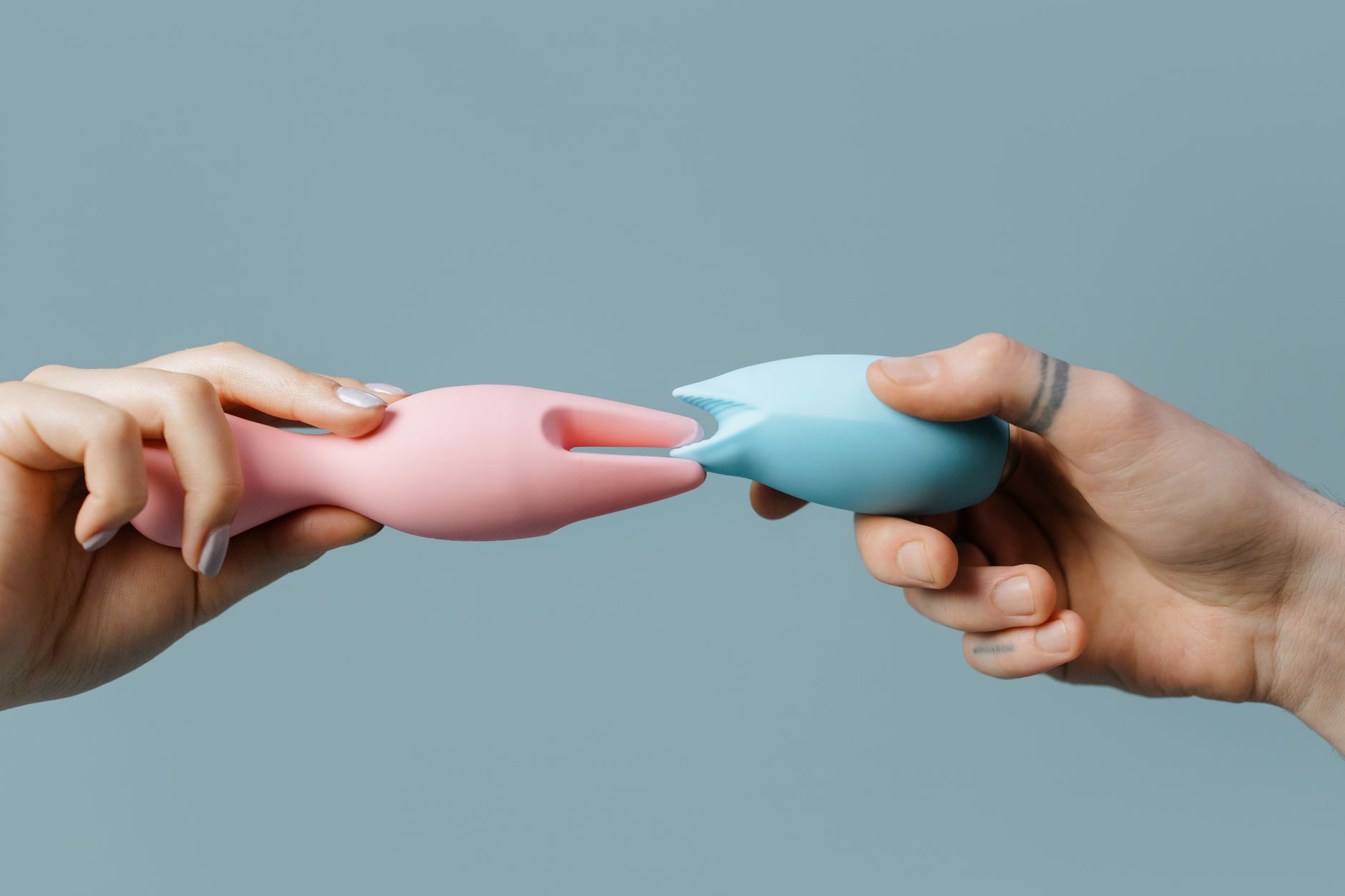
Here's what nobody tells you about sensitive vulva anatomy
Sensitivity isn't weakness. It's a feature, not a bug. But it does mean most standard vibrators feel like overkill, and some feel genuinely uncomfortable. The problem isn't your body. It's that most adult toys are designed around one mechanism: direct vibration against skin.
Direct vibration creates friction. Friction irritates sensitive tissue. And irritation kills arousal fast.
There's a reason clitoral vibrators using air-suction technology have transformed the conversation around vulva sensitivity. They work differently. And for sensitive bodies, different means everything.
Why your sensitive vulva hates friction vibrators
Your clitoris has roughly 8,000 nerve endings packed into a space smaller than a pea. That's why it's so responsive. But it's also why friction can feel sharp, overstimulating, or even painful if the tissue is thin, irritated, or naturally reactive.
Bullet vibrators buzz directly against skin. Wand vibrators use rapid tapping motions. Both rely on mechanical friction between the toy and tissue to create sensation. For sensitive vulvas, this can translate to numbness, rawness, or that overworked feeling where pleasure stops and discomfort begins.
Add in any of these factors and friction becomes genuinely painful. Vulva sensitivity spikes during certain phases of your cycle, after using certain medications, or when you're naturally prone to irritation. Many people think their clitoris simply can't handle vibration. What's actually happening is their clitoris can't handle friction.
How air-pulse lemon vibrators create sensation without friction
Lemon clitoral vibrators work on a completely different principle. Instead of vibrating against you, they create gentle suction and release cycles. The sensation comes from micro-pulses of air, not mechanical buzzing.
Think of it like the difference between someone rubbing your skin rapidly and someone applying gentle, rhythmic pressure. Both create stimulation. One irritates tissue. The other works with your body's nerve architecture.
The air-pulse mechanism means the toy never actually vibrates against sensitive tissue. There's contact, but there's no friction. The sensation travels deeper, stimulating the internal branches of the clitoral nerve network instead of just the surface. For sensitive vulvas, this is groundbreaking because it means pleasure without the micro-damage that comes with traditional vibration.
This is why so many people with sensitive vulvas who thought vibrators "weren't for them" discover that lemon clitoral vibrators actually work better than they expected. The mechanism matches their tissue, not their dysfunction.
Why you've probably never experienced this sensation before
Air-suction technology is newer in the mainstream adult toy market. For decades, the standard was bullet and wand vibrators. They're affordable to manufacture, easy to understand (press button, vibration happens), and they work for plenty of people.
But they're not optimized for sensitivity. They're just the baseline.
When you try a lemon vibrator for the first time, your nervous system might need a moment to recalibrate. The sensation is distinct. It's not the buzzing tingle you might associate with bullets. It's more of a pulsing, rhythmic pressure that builds gradually instead of hitting hard immediately.
Many people describe lemon clitoral vibrators as feeling "cleaner" or "more focused." The pulses are precise. You can feel exactly where the stimulation is happening. There's no spillover irritation on surrounding tissue because the technology is designed to contain sensation in one spot.
The practical advantages for sensitive skin
No numb-out effect. Friction vibrators can cause temporary numbness as they overstimulate nerve endings. You might orgasm, but it feels muted. Air-pulse lemon vibrators tend to maintain sensation throughout and after, so climaxes feel more full-bodied.
Adjustable intensity that actually adjusts. Many bullet vibrators offer "settings," but what they really do is buzz faster or slower. The friction level stays the same. Lemon clitoral vibrators let you control both pulse intensity and pattern, which means you can dial down the sensation itself, not just speed it up or slow it down.
Works with natural lubrication. Because there's minimal friction, you need less lubrication than you might think. This is especially helpful if your body produces less natural lubrication due to hormonal changes, medication, or just how your body works.
Doesn't aggravate existing irritation. If you have mild vulvodynia, dermatitis, or just that inflamed feeling from frequent friction vibrators, switching to an air-pulse lemon vibrator often brings relief within a few sessions. The difference in irritation levels is usually noticeable within a week.
Lemon vibrators versus other options you might have tried
If you've explored other clitoral vibrators and felt underwhelmed or irritated, here's what you might have experienced.
Bullets. Fast, high-pitched vibration. Designed for intensity. If you have sensitive tissue, bullets often feel sharp or cause that numb-out sensation after a few minutes. The contact point is usually rigid, which means all stimulation is concentrated in one small area without much give or flexibility.
Wands. Broader surface area, which distributes pressure. But the vibration is still mechanical friction. Wands can be great for external stimulation and for people who like intense, broad sensation. For sensitive vulvas, they sometimes create that overstimulated feeling because the wide head presses against a larger patch of tissue for longer.
Suction toys that actually suck. Some toys marketed as "suction" actually create genuine suction, pulling tissue into a chamber. Powerful, yes. But also intense and potentially irritating. Lemon clitoral vibrators use micro-pulses of air suction, which is gentler and more controlled.
App-controlled or remote vibrators. These give your partner control, which is fun for some couples. But they don't address the friction issue if you have sensitive vulva tissue. The mechanism is still typically a vibrating element against skin.
How to ease into lemon vibrators if you're nervous
If you've had bad experiences with vibrators, starting with a lemon clitoral vibrator requires a different mindset. You're not jumping into intensity. You're exploring sensation in a completely different way.
Start at the lowest setting. The air-pulse sensation builds gradually. You might think "this feels subtle," but as you relax and your nervous system adjusts, you'll notice the intensity grows. Many people find that what felt understated on first try becomes deeply satisfying after about sixty seconds.
Take time with external exploration first. Run the lemon vibrator across your vulva without focusing on your clitoris immediately. Notice how it feels on your labia, your perineum, around your clitoris. You're building a map of sensation. This takes pressure off the clitoris to perform.
Use plenty of lubrication even though you might not need as much as with friction vibrators. Water-based lube makes the air pulses feel smoother and reduces any potential irritation from the seal around your clitoris.
Stop if anything feels painful. Sensitivity and pain are different. Sensitivity is okay. Pain is your body saying no. If a lemon vibrator causes sharp or burning pain, it's not the right toy for your current tissue state. That's not a failure. That's useful information.
When to reach out for support
If you've tried multiple toys and everything causes irritation or pain, that's worth exploring with a healthcare provider. Vulvodynia, dermatitis, hormonal shifts, and other conditions exist and are treatable. A lemon clitoral vibrator might eventually feel amazing. But first, it can help to rule out underlying tissue issues.
If you're with a partner and they're using a vibrator on you, communication matters more here than with other toys. Because the sensation is so precise, you'll know exactly where stimulation is happening. Tell your partner if intensity needs adjusting, if a different area feels better, or if you need a break. Pleasure shouldn't require pushing through discomfort.
Most importantly, remember that exploring your pleasure with sensitive tissue is a skill. It takes time. Lemon clitoral vibrators make that exploration gentler and often more rewarding than traditional options. But they're not magical. They're just better aligned with how sensitive tissue actually responds to stimulation.
People also ask
Are lemon vibrators safe for sensitive vulva skin?
Yes. The air-pulse mechanism creates minimal friction, which is actually gentler than traditional vibrators for sensitive tissue. That said, individual bodies vary. If you have an active skin condition, dermatitis, or other vulva concerns, starting slowly and monitoring how your tissue responds is wise. If irritation develops, pause and give your tissue time to recover.
How is a lemon clitoral vibrator different from a suction toy?
True suction toys create strong pulling sensation, which can be intense and uncomfortable for sensitive vulvas. Lemon vibrators use gentle air-pulse technology that mimics suction but with far less pull. The sensation is rhythmic and controllable rather than sustained and forceful. Most people find lemon vibrators much more comfortable than hardcore suction toys.
Can you use a lemon vibrator if you're taking medications that affect sensitivity?
Often yes. Antidepressants, blood pressure medication, and hormonal birth control can all reduce clitoral sensitivity. Lemon clitoral vibrators work well with reduced sensitivity because the stimulation is direct and focused without requiring high levels of sensation to register. That said, if medication is causing complete numbness or pain, that's a conversation worth having with your prescriber.
How long does it take to reach orgasm with a lemon vibrator?
This varies wildly. Some people climax within two minutes. Others need fifteen or twenty. With lemon vibrators, you're usually in a narrower range because the sensation is precise. What matters more than speed is consistency. Lemon vibrators tend to build sensation steadily rather than overwhelming you immediately, which many sensitive people prefer.
Should you use lube with lemon clitoral vibrators?
Yes, even though you might need less than with friction vibrators. Lube creates a smoother seal around the clitoris, which makes the air-pulse sensation feel more consistent and less grabby. Water-based lube is best because it won't degrade silicone toys and works with the mechanism of the vibrator.
Can sensitive vulva tissue get used to other vibrators if you practice?
Sometimes. But there's a difference between adaptation and accommodation. Your tissue might tolerate a friction vibrator more over time, but that doesn't mean it's ideal for sensitivity. It usually just means you've pushed past discomfort rather than finding pleasure. Lemon clitoral vibrators tend to feel genuinely good rather than "tolerable," which is why many people who've struggled with other toys find them transformative.
The shift toward sensitivity-centered design
For too long, vibrator marketing aimed at one profile. Loud, fast, intense. Built for people who wanted to climax in record time or who'd already trained their bodies to respond to harsh stimulation.
But pleasure isn't about speed or intensity. It's about sensation that feels good to your specific body. Lemon vibrators represent a shift toward toys designed around physiology, not just capability. They work better for sensitive vulvas not because they're weaker, but because they're smarter.
Your sensitivity is an asset. It means you have access to deep, nuanced pleasure that less sensitive bodies might need to work harder to find. The right tool, like a lemon clitoral vibrator, unlocks that without leaving your tissue raw or overwhelmed.
If you've been frustrated with vibrators in the past, this is worth another try. Sensitivity and satisfaction aren't mutually exclusive. They're just waiting for the right mechanism.