
Let's name what grief does to your body
Grief isn't just sadness. It's a full-body shutdown. When you lose someone, your nervous system goes into protection mode, pulling resources away from anything that isn't survival. Sex, pleasure, sensation. Those feel impossible. Your partner might want to reconnect. You might want to want it. And your body just... won't cooperate. That's not rejection. That's grief doing its job.
Here's what I see in my practice: people move through grief in stages, but pleasure doesn't follow the same timeline as acceptance. You can be functioning, going to work, making dinner. And still be completely numb from the waist down. The grief hasn't "healed enough" for intimacy yet. But your partner is still there. And you're still a person with a body that deserves touch.
Why pleasure disappears (and why it's not permanent)
When you're grieving, your brain prioritizes threat detection over reward. Dopamine drops. Oxytocin, the bonding hormone, becomes harder to access. Cortisol stays elevated. Your pelvic floor tightens in a protective clench that doesn't release even when you try. Touching your own body can feel foreign, like you're inhabiting someone else's skin.
The good news: this isn't broken. It's a phase. And it responds to gentle, non-pressured stimulation.
Most people wait until they feel ready for sex before trying anything. But readiness doesn't work that way after loss. Your body needs permission to wake up first. Small, manageable sensations that don't demand anything emotional. That's where lemon clitoral vibrators come in.
The lemon vibrator advantage for grieving bodies
A lemon sucker like Hello Nancyslem's works differently than a traditional vibrator. Instead of friction, it uses rhythmic suction and gentle pulsing. That pattern feels less intrusive, less demanding. It's easier to be present with because you're not managing the physical intensity of penetration or direct vibration.
For someone numb from grief, that matters. You don't need a powerful sensation. You need a consistent, trustworthy one. The lem vibrator's suction patterns are predictable. You know what's coming. That predictability helps your nervous system relax enough to feel anything at all.
Second: there's no performance expectation. If you use it alone, you're not managing anyone's disappointment. If you use it with a partner, it's a tool you control entirely. Your partner isn't doing anything. They're just present, which is actually the hard part of rebuilding intimacy after loss.
Starting small when you're numb
Here's the rhythm I recommend when grief has closed you off completely:
Week one: sensation only. Ten minutes, lowest setting, no goal. You're not trying to orgasm. You're not trying to feel turned on. You're just noticing: does this feel neutral? Pleasant? Annoying? Where do you notice it in your body? Grief often lives in the chest and throat. Pleasure lives lower. Reacquainting your brain with that lower zone matters.
Week two: add a partner's presence. Same ten minutes, same low setting. But they're in the room, maybe reading, maybe just present. Not touching you, not watching intensely. Passive presence. The point is rebuilding nervous system safety around having pleasure while someone you trust exists nearby.
Week three: expand the conversation. After a few sessions, you might notice something. A preference. A moment where you felt slightly less numb. Talk about it. Not in a "what did this mean" way. In a "I noticed my body responded to pattern two, that felt less jarring" way. This is data, not intimacy. Keep it clinical. Clinical is safe right now.
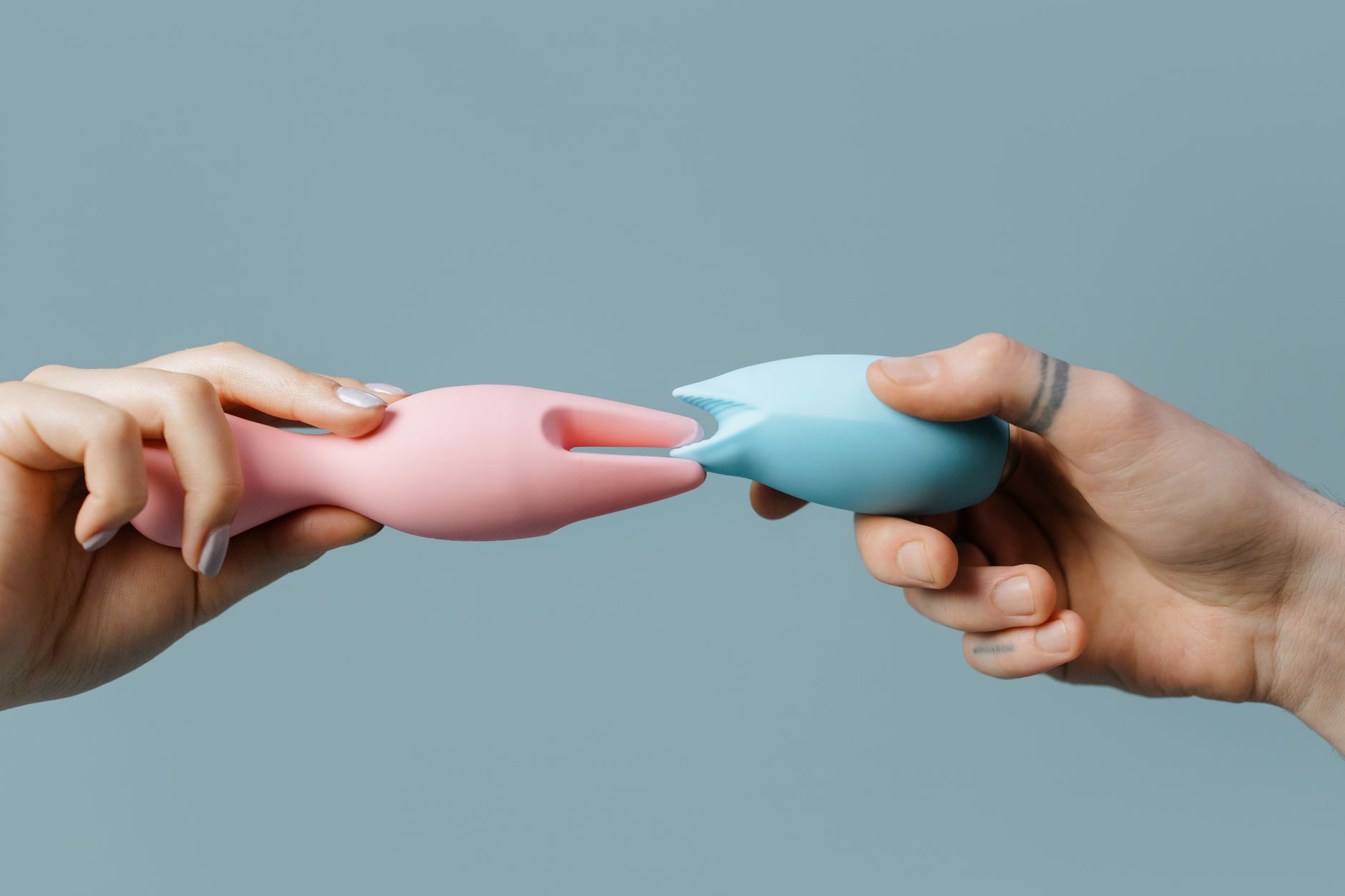
Photo by cottonbro studio on Pexels
What lemon sexual toys can't do (and what you actually need)
A lemon vibrator won't make grief go away. It won't fast-track you through loss or shortcut the real work of mourning. Some days, the numbness will be thicker than others. Some days you won't want to try at all. That's grief doing its job. Don't push.
What these lemon adult toys can do is give your body a gentle, judgment-free way to remember that sensation is possible. That pleasure still exists somewhere in the nervous system, even if it's not accessible today. That's actually huge.
The real work happens in the conversations after. When you notice a shift, small as it is, and you talk to your partner about it. When you start asking: what's changed? When are you most present? What does your body need that it's not getting? Those conversations rebuild the emotional intimacy that makes physical intimacy possible.
The partner's role when grief has closed off sex
If your partner is reading this: what your grieving person needs from you isn't patience (they'll feel that as pressure). It's genuine, no-agenda presence. When they use a lemon clitoral vibrator, you're not there to orchestrate anything. You're there to prove that physical pleasure doesn't threaten the space you hold for their grief. That those two things can coexist.
Don't ask "did you come?" Ask nothing. Let the experience breathe. Afterward, if they mention something they noticed, listen like you're gathering intelligence about their changing body, not like you're trying to fix them back to normal.
Grief doesn't have a normal. Your partner isn't broken. Their body is grieving too.
When to know it's working
You'll recognize the shift in small ways. A moment where you forgot to be sad for thirty seconds while something felt good. A conversation where you could say "I think I'm ready to try something different" without it feeling impossible. A night where you wanted your partner's hand on your back, and that felt like a beginning.
These aren't orgasms or declarations of being "over it." They're neural signals that your nervous system is starting to trust safety again. That's the foundation. Pleasure rebuilds on top of that.
For some people, that process takes weeks. For others, months. There's no timeline. You're not supposed to heal on anyone's schedule but your own.
Frequently asked questions
Can using a lemon vibrator help me feel less numb if I'm in acute grief?
Maybe, maybe not. If you're in the first few weeks or months after a loss, your body might be too flooded with stress hormones to register pleasure at all. That's normal. Waiting two to three months before introducing any kind of sensation exploration is reasonable. Grief isn't linear, though. Some days you'll feel more present than others. When you do, that's when gentle exploration makes sense.
What if my partner wants to have sex but I'm grieving and just don't?
That's a conversation that has nothing to do with a lemon clitoral vibrator. It has to do with what your partner needs to hear: "I love you and I'm still here, and my body is grieving separately from my heart." Some partners understand that instantly. Some need help understanding that rejection of sex right now isn't rejection of them. A therapist can help with that conversation in ways I can't in text.
Is it selfish to use a toy alone when my partner wants physical connection?
No. Reconnecting to your own body is foundational. You can't offer your partner access to your pleasure if you've lost access yourself. Using a lemon sexual toy to reestablish that neural pathway is actually generous to the relationship. You're working on yourself. That benefits both of you.
How is grief-related numbness different from numbness from medication?
Grief-related numbness usually comes with heavy chest and throat sensations. Medication-related numbness is more diffuse. If you're on antidepressants after a loss (which is smart), the numbness layers. Address both things separately. Talk to your psychiatrist about dosing, and separately, work on the grief part. Here's more on how lemon clitoral vibrators help with sensation changes after starting new medications.
Can a lemon sucker make grief worse by forcing me to feel things I'm not ready for?
Only if you push. The whole point is no pressure. If you set a time and nothing happens and you feel frustrated, that's fine. Stop. Try again next week. Grief will let you know when your nervous system is ready to receive sensation. You're not forcing it. You're offering it. There's a difference.
Should I tell my partner I'm using a lemon vibrator while grieving, or keep it private?
That depends on your partnership agreement around privacy. Generally though, transparency helps. Not as "I need this to not divorce you" but as "I'm working on reconnecting to my body and it's helpful." Most partners want to be part of the process. Some need to know they're explicitly not part of it right now. Whatever you choose, be clear about it.
The path forward
Grief changes you. It rewires your nervous system, your sense of safety, your relationship to pleasure. A lemon vibrator isn't going to undo that. But it can be a gentle, patient tool while you navigate it. A way for your body to remember that sensation and safety can coexist. That pleasure isn't betraying the person you lost. That your body deserves care even while your heart is breaking.
Start where you are. One ten-minute session. Lowest setting. No expectations. Your body will tell you what it needs next.
If you're grieving and you want to talk through how to navigate intimacy with your partner, we're here. Reach out at /contact.
Sources:
- Bowlby, J. (1980). Attachment and Loss: Vol. 3. Loss: Sadness and Depression. Basic Books.
- Porges, S. W. (2011). The Polyvagal Theory: Neurophysiological Foundations of Emotions, Attachment, Communication, and Self-regulation. W. W. Norton & Company.
- Kübler-Ross, E. (1969). On Death and Dying. Macmillan.