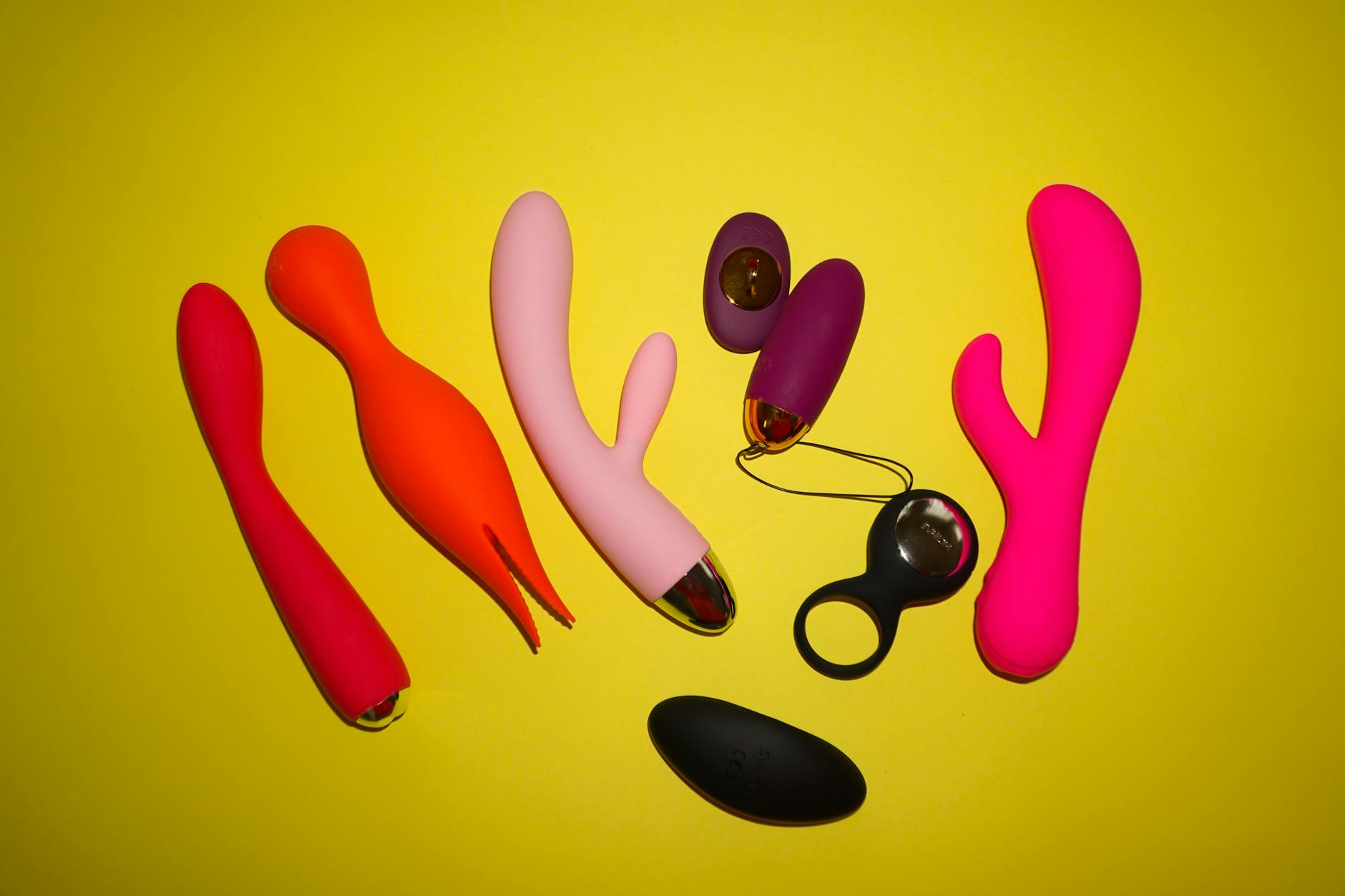
Let's be honest about what your thirties do to pleasure
Your thirties are not your twenties. I say that not as judgment, but as clinical observation after two decades of working with couples. Sensation changes. Not in a bad way, necessarily, but differently. The speed, the intensity, the frequency, the way your body responds to touch. All of it shifts when you're juggling a career, maybe a partner, maybe kids, maybe all three.
Most people assume this is just how it is. Accept it. Move on. But here's the thing: much of what feels like "my body isn't responding like it used to" is actually about nervous system state, attention, and the right tool. And that's fixable.
What actually changes in your thirties
Physiologically, your thirties aren't dramatically different from your twenties in terms of raw capacity. You're still producing estrogen, testosterone is still circulating, your clitoral nerve density hasn't changed. But everything around those facts has.
First: cortisol. Your stress hormone is elevated. You're probably sleeping less, moving less intentionally, eating more irregular meals. Your nervous system is in a lower-grade activation state most of the time. That directly suppresses arousal. Your brain can't flip into pleasure mode if it's still in work-mode.
Second: attention. In your twenties, you might have had an hour on a Saturday afternoon with zero other demands. Your thirties? Your phone is doing three things, your partner is in the next room, your brain is running a background thread of tomorrow's meeting. Arousal requires presence. Full presence. That's harder to manufacture when you're dividing bandwidth.
Third: expectation fatigue. This sounds subtle, but it's real. By your thirties, you've had enough sexual experience to know what "should" happen. When it doesn't happen that way, faster, with the same intensity, there's often a tiny disappointment that actually blocks arousal further. You're waiting for the old feeling instead of meeting what's actually here.
Why sensation feels muted (and what it actually means)
Many of my clients in their thirties describe sensation as "softer" or "slower to build." They're not imagining it. Here's what's happening.
Your clitoris still has the same nerve endings. But the pathway to activation is slower because your nervous system is already occupied. Imagine trying to get a phone call through when the lines are congested. The call is still trying to get through, but the wait time is longer.
Also: pacing. In your twenties, maybe you had 10 minutes of foreplay before things intensified. In your thirties, you might need 20. Not because something is wrong, but because your body is asking for longer to downshift from the rest of your day and upshift into pleasure.
And here's the piece no one talks about: your pleasure is deeper now, even if it doesn't feel as sharp. A sharp orgasm from a twenty-two-year-old after five minutes of stimulation is exciting. A slower-building, more resonant orgasm from someone in their thirties who's fully present? That's actually often more satisfying, once you stop comparing it to the old speed.
Why the Lem works differently for you in your thirties
Lemon clitoral vibrators, and specifically the Lem, work better in your thirties than in your twenties for one specific reason: precision over novelty.
In your twenties, a vibrator is exciting because it's new and intense. By your thirties, your nervous system actually benefits from a tool that delivers consistent, focused sensation without the noise. The Lem's suction mechanism doesn't vibrate in the traditional sense. It creates rhythmic pulses that stimulate through pressure change, not mechanical buzzing.
Why does that matter? Because your nervous system in your thirties is already overstimulated by email, notifications, and auditory input all day. A subtle, precise sensation actually registers more intensely than a higher-frequency buzz. You get signal instead of noise.
The Lem also means less friction on tissue, which matters because skin sensitivity often increases with stress (counterintuitively). You might have found direct vibration fine in your twenties. In your thirties, especially if you're carrying tension, suction-based stimulation often feels less irritating and more satisfying.
Second reason: efficiency. You have less time. The Lem delivers faster activation for people whose nervous systems need a longer warm-up to initiate, but then reaches intensity quickly once that threshold is crossed. You're not spending an hour building. You're building smart.
How to reclaim sensation in your thirties
Three moves that actually work:
Build your warm-up window differently
Don't just add time. Change the type. Thirty seconds of your partner's hand is not the same as five minutes with the Lem on your own while your brain gets permission to slow down. The alone portion doesn't have to be long, but it has to come first. You're priming your nervous system, not your partner.
Once you've shifted gears alone, partner time (or solo continuation) hits differently because your arousal isn't starting from zero.
Protect your attention
Phone in another room. Seriously. The hardest part of pleasure in your thirties isn't sensation. It's permission to stop monitoring your inbox. Five or ten minutes without your phone somewhere visible is more powerful than it sounds. You'll be shocked at how much your body responds when your prefrontal cortex isn't half-engaged.
Use the right tool at the right time
Lemon clitoral vibrators work best when you're primed, not when you're trying to force arousal from a dead start. Use 5-10 minutes of your own touch or your partner's touch first to activate your nervous system. Then bring in the Lem. You'll notice the difference immediately.
The role stress plays (and how it isn't your fault)
I want to be clear about something: if sensation feels muted in your thirties, it's not because your body is failing. It's because your nervous system is busy. And that's not a personal failing either. Your thirties genuinely are more full of demands.
But here's the liberating part: you can work with that. You don't have to wait for life to calm down (it won't). You design pleasure time that accounts for where you actually are.
That might mean treating it more intentionally than you did at twenty-two. Scheduling isn't sexy, but showing up with a relaxed nervous system beats spontaneous pressure every single time.
Common friction points and how to move past them
If you're using a lemon vibrator (or clitoral vibrators in general) and something feels off, here are the most common culprits.
Too much sensation too fast. Start on the lower settings. Seriously. Your thirties brain often says "give me everything" but your thirties body says "let me warm up first." Listen to your body.
Not enough solo time first. If you're jumping straight to the Lem without any warm-up, you're expecting it to do the job of arousal initiation. It's not designed for that. It's designed for amplification.
Distraction that you're not actually noticing. That podcast playing in the background, the light from the doorway, the fact that you're thinking about tomorrow. These aren't character flaws. They're just what your nervous system needs to optimize. Adjust the environment and you'll notice a real difference.
Comparison to your twenties. This is the big one. The orgasm you have at thirty-four with full presence and the right tool is categorically different from the orgasm you had at twenty-four after a spontaneous moment. Different doesn't mean worse. It's usually richer, more grounded, more connected. Stop comparing.
The intimacy question: does your partner need to know?
Here's what I tell couples: using tools like the Lem alone isn't a statement about your relationship. It's a statement about your nervous system and what it needs in this decade.
That said, the couples who report the best outcomes are the ones who eventually talk about it. Not in the "we need to discuss this" way. But in the "this thing actually works for me" way. You don't need your partner's permission or participation. But knowing they know, and that it's fine, removes a layer of secrecy that often dampens pleasure more than the tool enhances it.
Why your thirties might actually be your best decade for pleasure
I'm not saying that to be optimistic. I'm saying it because I've watched it happen again and again with clients.
Your twenties are often about discovery and novelty. Your thirties, if you do the work, are about deepening. You know your body. You know what you actually want versus what you think you should want. You're less embarrassed. The people worth keeping around are the ones who support your pleasure instead of performing for it.
The right tools, the right boundaries around attention, and the right framework for understanding how your nervous system actually works now? That's not a consolation prize. That's an upgrade.
FAQ: Lemon vibrators and pleasure in your thirties
Why do I feel like my orgasms are less intense in my thirties even though nothing's medically wrong?
Intensity and presence are different things. Your nervous system in your thirties is often managing more, which means arousal activates differently. You might have higher-intensity peaks at twenty-two, but slower, deeper, more resonant orgasms at thirty-four. Both are valid. If you prefer more intensity, the Lem's precise suction often delivers that faster because it doesn't require as much foreplay warm-up.
Can a lemon clitoral vibrator actually make sensation feel sharper if it currently feels dull?
Yes, but not by itself. The Lem works best as part of a system: nervous system downshift first, attention protection second, then the tool. Using the Lem without addressing your broader stress or attention usually means you're just adding vibration to a still-busy nervous system. That's why it's not working.
Is using a tool like the Lem a sign my partner isn't enough?
No. Using the Lem is a sign your nervous system in your thirties needs specific input to reach a state where pleasure is possible. That's biology, not relationship deficit. Many couples find that using the Lem together actually deepens their connection because they're both working toward the same outcome: your full presence and pleasure.
How long does it usually take to notice a difference with a lemon vibrator?
First use, if you're warmed up and present, you'll notice the sensation is different. Better? That depends on your baseline. If sensation feels muted because of stress or inattention, addressing those first will change your response to any tool. The Lem is then an amplifier, not a rescue mission.
What if the Lem feels too intense for my sensitivity in my thirties?
Start on the lowest setting and use it after you're already aroused, not as an opener. You might also benefit from a water-based lubricant even if you don't typically need one. Your thirties can bring shifts in tissue sensitivity that weren't there before. The tool is adjustable. Your body is adjustable. You're just finding the right fit.
Should I be using a lemon vibrator solo or with my partner?
Both. Solo use lets you learn what your nervous system needs without performance pressure. Partner use, if you want it, is richer when you already know your own activation. Start alone. Add partner involvement if and when it feels right. The Lem works in both contexts, but the context changes the experience.
The thing about your thirties and pleasure
Your thirties are when pleasure stops being a thing that happens to you and becomes a thing you architect. That's not sad. That's actually the moment it gets good. You know yourself. You know what works. You know what you deserve.
Tools like lemon clitoral vibrators, when used with intention and presence, let you meet your body where it actually is now. Not where it was. Not where you think it should be. Where it is.
That's not settling. That's precision. And precision, in your thirties, is a superpower.
Have questions about how to use lemon vibrators or want to talk through what sensation changes are normal for your age? Reach out. I'm here to help you figure out what pleasure actually looks like for you right now. Get in touch with Hello Nancyslem.