Perimenopause is not a straight line
Let's be real: perimenopause is chaos. One week you're aroused at the drop of a hat. The next week, the same touch that felt incredible feels flat or even irritating. Your partner touches you the same way and gets two completely different responses. It's not them. It's your hormones, and they're not following any schedule.
This unpredictability is one of the most frustrating parts of perimenopause, and it's the part that almost nobody talks about honestly. Most coverage of midlife sexuality fixates on menopause itself, but perimenopause (the 5-10 years before your last period) is when the real disruption happens. Your body is still cycling, but the cycle is increasingly chaotic.
Here's what I've observed clinically: lemon clitoral vibrators work differently in this phase than any other toy design, and understanding why changes everything.
What's actually happening to sensation during perimenopause
During perimenopause, estrogen and progesterone don't decline smoothly. They spike, crash, stabilize for a bit, then spike again. This creates a moving target for sensation and arousal.
When estrogen is high (early cycle), tissue is plump and well-lubricated. Nerve endings respond quickly. Arousal builds fast. Touch feels amplified. When estrogen drops (late cycle or during a skip month), tissue thins, lubrication decreases, and arousal takes much longer to build. Sometimes it doesn't build at all.
This matters for toys because most vibrators are designed for a stable hormonal baseline. They assume your tissue has a consistent thickness, your nerve sensitivity stays the same, and your arousal response is predictable. Perimenopause violates all three assumptions.

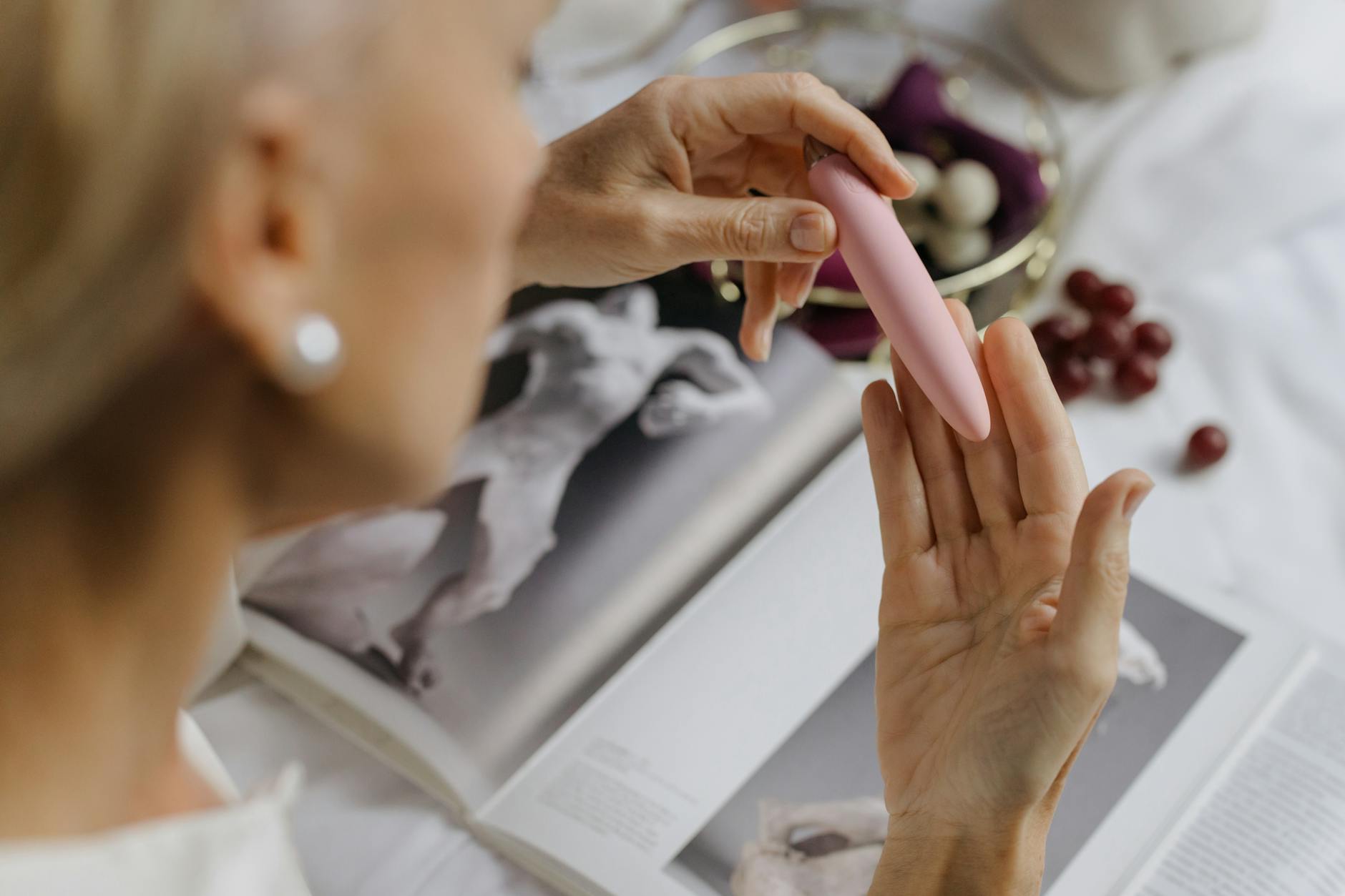
Photo by Ihsan Adityawarman on Pexels
Why lemon suction vibrators feel better across hormonal shifts
Lemon vibrators, including designs like the Lem, work via air-pulse or suction technology rather than direct vibration. Instead of a buzzing frequency applied directly to sensitive tissue, suction creates a gentle pressure wave that stimulates the entire clitoral complex, not just the surface.
This matters enormously during perimenopause for three reasons.
First, suction adapts to tissue thickness. When estrogen is high and tissue is plump, suction feels deeper and more encompassing. When estrogen drops and tissue thins, the same suction intensity still works because it's not relying on sustained pressure against delicate surface tissue. It's gentler by design, which is exactly what thin, sensitive tissue needs.
Second, suction doesn't fatigue thin tissue. Traditional vibrators can feel almost uncomfortable during low-estrogen phases because the repeated impact on delicate tissue creates irritation. Suction stimulation is non-impact. It's a pull-release rhythm rather than a percussive hit. After 15 minutes with a lemon clitoral vibrator, you feel satisfied. After 15 minutes with a bullet vibrator on thin tissue, you often feel raw.
Third, suction engages the entire clitoral network. The clitoris extends internally, and direct vibration often misses most of it. Suction creates a broad pressure field that stimulates the whole structure at once. This becomes crucial during perimenopausal phases when direct touch feels too intense, but deeper, broader stimulation feels exactly right.
How to use lemon vibrators across the cycle
If you menstruate during perimenopause (even erratically), you have roughly three hormonal phases to navigate, even if the timing keeps shifting. Here's the strategic approach.
Days 1-10 (high estrogen, bleeding or post-bleeding). Your tissue is resilient and well-lubricated. This is often when stimulation feels most satisfying. You can use your lemon clitoral vibrator at full power, extend sessions, experiment with multiple patterns. Your body is forgiving right now. Take advantage.
Days 11-21 (ovulation, peak estrogen). Arousal should peak here. You might experience the most intense sensations of your cycle during this window. A lemon vibrator will feel spectacular because suction stimulation layers beautifully with your natural arousal peak. This is prime time to explore new patterns or longer sessions.
Days 22-28+ (low estrogen, approaching menstruation or skipping entirely). This is when the magic of suction technology really shows up. Start at the gentlest setting. Use lubricant even if you usually don't need it. The suction won't feel harsh because it's not directly abrading tissue. Many people report that their most emotionally intimate, slow-paced sessions happen in this phase.
The difference between a lemon vibrator and traditional toys becomes clearest in that third phase. A bullet vibrator often feels intolerable. A wand vibrator can feel like overkill. But a lemon sucker feels like it's made for this exact situation.
The unpredictability problem (and how to solve it)
Some months, your cycle is 28 days. Some months it's 35. Some months you skip a period entirely and have no idea where you are hormonally. This makes planning literally impossible.
Here's what actually helps: track not your calendar, but your sensation. Keep a one-word note: How did stimulation feel today? "Sensitive," "electric," "numb," "perfect." After 2-3 months, you'll see a pattern emerge even if the dates don't repeat. You'll notice that "numb" weeks tend to cluster, and those are the weeks where you reach for your lemon clitoral vibrator because it works when other things don't.
You're not broken. Your body is just communicating differently depending on what's circulating in your bloodstream.
Lubrication becomes non-negotiable
During perimenopause, even in high-estrogen phases, vaginal secretions can feel less abundant than they did before. Use water-based lubricant generously, even if you produce natural lubrication. This isn't weakness or dysfunction. It's hormone biology.
With lemon sexual toys and other suction devices, lube serves a second purpose: it improves the seal, which makes the suction feel stronger. It's a win on both fronts.
When inconsistency signals something beyond hormones
Sometimes pleasure flatlines or becomes painful, and it stays that way. If numbness or discomfort persists across multiple weeks and doesn't seem to correspond to your cycle, see a healthcare provider. Perimenopause can coincide with other things: relationship strain, thyroid changes, medication shifts, or pelvic floor dysfunction.
I've worked with many clients who assumed their pleasure loss was purely hormonal, only to discover their partner had said something hurtful months prior and the sting was still there. Or their antidepressant dose had changed. Or they were grinding their pelvic floor unconsciously from stress. Sensation loss is often a symptom, not a diagnosis.
A lemon vibrator can absolutely help restore pleasure during perimenopause. But if you're using one consistently and still feeling nothing, that's information worth exploring with a professional.
The emotional piece nobody mentions
Here's what makes perimenopause unique: it's not just your body changing. Your identity is changing. You're moving away from reproductive years. You're often managing aging parents, adult children, career shifts, and relationship renegotiations simultaneously.
That psychological load has direct effects on arousal. Pleasure loss during perimenopause is sometimes hormonal, sometimes psychological, and usually both tangled together. Lemon clitoral vibrators address the physical side. But you also need to address the headspace: What does pleasure mean to you now? What do you actually want? Are you having sex because you're supposed to, or because you want to?
These questions matter more during perimenopause than at any other life stage.
FAQ: Perimenopause, sensation, and lemon vibrators
Can I use a lemon vibrator during perimenopause if I'm not sure where I am in my cycle?
Completely. Lemon suction vibrators work across all hormonal phases because suction adapts to tissue changes in ways that rigid vibrations don't. You don't need to time it. Use it whenever you want to and notice how your body responds. That feedback becomes your best guide.
Why does the same lemon clitoral vibrator feel different from week to week?
Your tissue thickness, blood flow to the clitoris, lubrication levels, and nerve sensitivity are all hormone-dependent. These change constantly during perimenopause. The toy hasn't changed. Your body has. That's not a malfunction. It's information.
Should I use higher intensity settings or lower settings during low-estrogen phases?
Start lower during those phases and work up. Your tissue is more delicate, and your nerves are often less responsive, so gentle stimulation works better initially. You might find that you eventually need higher intensity to reach orgasm, but the path there should be gradual. You're listening to your body, not forcing it.
Can a lemon vibrator help if my desire has completely disappeared during perimenopause?
Maybe, but probably not alone. Desire loss during perimenopause is usually multifactorial: hormones plus stress plus relationship stuff plus aging identity questions. A lemon sucker can wake up physical sensation, which sometimes reignites desire. But if desire is truly gone, that's worth talking through with a partner or therapist before reaching for a toy. The toy might help, but it's not the whole answer.
Is it normal for orgasms to feel different during perimenopause?
Completely normal. Orgasms can feel shallower, more scattered, more intense, harder to reach, easier to reach, or completely different from year to year. Perimenopause is a moving target. Some people report their most intense orgasms happen in low-estrogen phases because the pressure builds more slowly and feels more concentrated. Others feel their best during high-estrogen phases. You have to explore your own pattern.
What if I'm using a lemon vibrator and still not feeling pleasure?
First: check the hormonal component. Track what's happening across your cycle. Second: check the relationship component. Are you actually present, or are you distracted? Do you feel safe and wanted? Third: check the medical component. Thyroid issues, depression, medication changes, and pelvic floor dysfunction can all kill sensation. If lemon vibrators aren't helping after consistent use, talk to someone. You deserve support.
The perimenopause reframe
Perimenopausal pleasure doesn't have to be about chasing what you had before. It can be about discovering what you actually want now.
Lemon vibrators, including designs like the Lem, work particularly well during this phase because they meet your changing body where it is, week to week. They're forgiving. They're adaptable. They don't punish you for having a different kind of body than you did at 25.
Your pleasure matters during this phase as much as it ever did. You deserve tools and information that actually fit your reality, not vague reassurance that "it'll be fine." It will be fine. But you have to work with your body, not against it.
If you're navigating this phase and feeling lost, reach out. You don't have to figure this out alone.