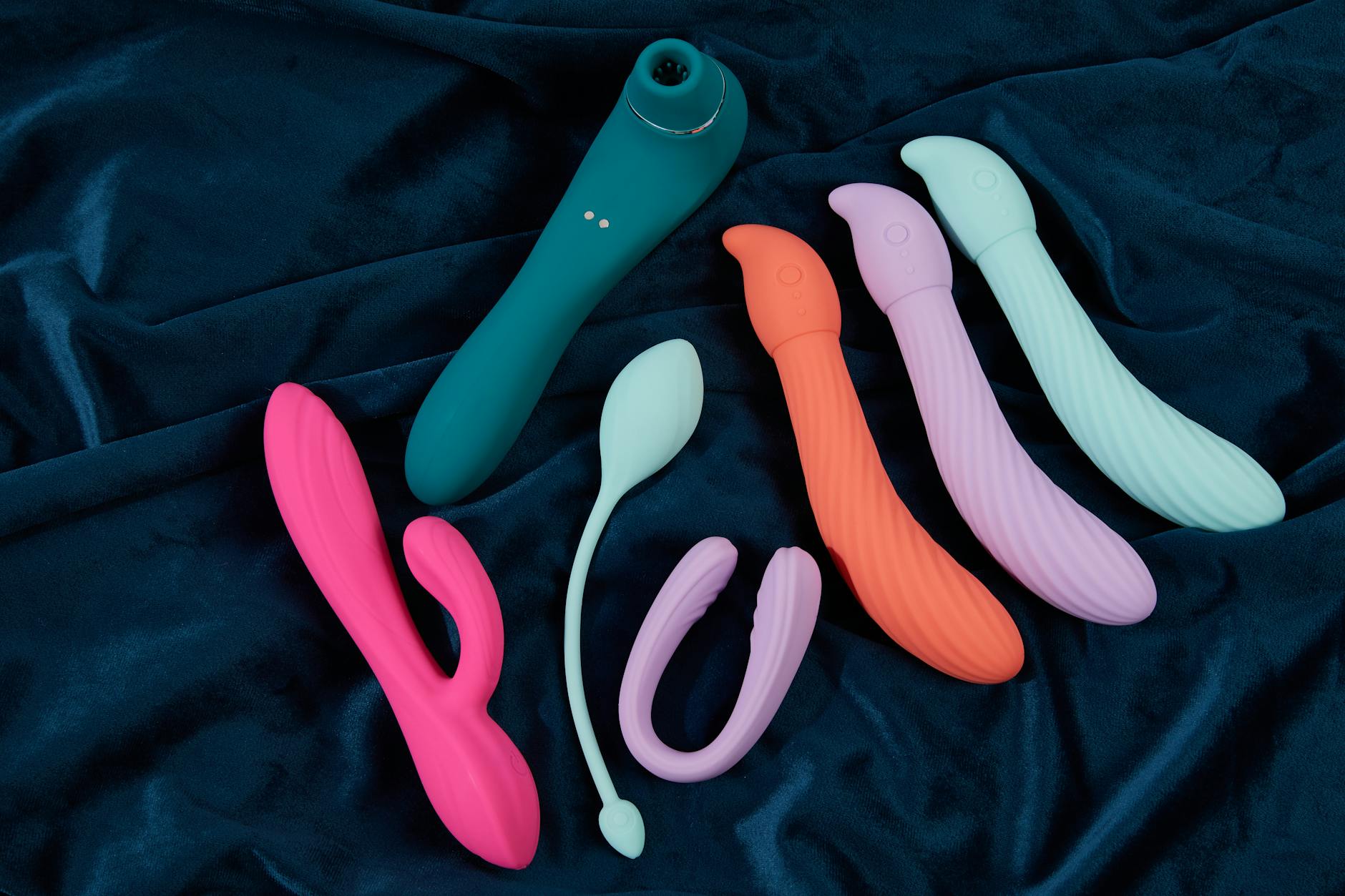
How Lemon Vibrators Work With Hormonal IUD Changes: Sensation, Timing, and Pleasure
Let's be real: nobody tells you that a hormonal IUD rewires your pleasure schedule. They mention cramps, lighter periods, and maybe some mood stuff. But the part where your arousal window narrows, your sensitivity shifts, and the timing of your orgasm changes? That gets glossed over or left out entirely.
If you've noticed that what used to work isn't working the same way anymore since your IUD insertion, your body isn't broken. The hormones are different, and your nervous system is recalibrating. That's where a tool like a lemon clitoral vibrator becomes genuinely useful. Not as a hack, but as a recalibration device that meets your body's new rhythm.
What hormonal IUDs actually do to arousal
A hormonal IUD releases a small, steady dose of the synthetic progestin levonorgestrel directly into your bloodstream. It's less dramatic than oral birth control because the dose is lower and localized, but the effect on arousal is still measurable and real.
Three main shifts happen. First, your baseline dopamine and testosterone drop slightly. Testosterone isn't just a male hormone. People with vulvas produce it in their ovaries and adrenal glands, and it's responsible for sexual appetite, the urge to initiate, and the speed at which arousal builds. When it dips, you might notice you're not as quick to get turned on, even when you want to be.
Second, the progesterone creates a subtle flattening of your arousal peak. The spike in desire that happens mid-cycle (normally driven by estrogen dominance) becomes less pronounced. For some people, this is actually a relief. No more unpredictable spikes that don't match their schedule. For others, it feels like someone dialed down the volume on pleasure.
Third, your cervix and vaginal tissue respond differently to stimulation. The hormonal shift can make the vaginal entrance slightly less elastic and the clitoris slightly less reactive to direct touch. This is why some IUD users report that traditional vibrators feel less intense or require more direct pressure to reach orgasm.
Why the arousal window narrows
Before an IUD, your arousal window opened and closed based on your cycle. You had days when your body practically asked for sex, and days when it took more intentionality. That rhythm is controlled by estrogen and testosterone interplay.
With a hormonal IUD, you lose that cyclical wave. Your hormone levels stay relatively flat month to month. This means your nervous system stops receiving the monthly signal to ramp up arousal. The upside: no more surprise desire spikes that are inconvenient. The downside: you have to create arousal more actively instead of riding a biological wave.
Many IUD users find that their arousal doesn't build organically the way it did before. They need more foreplay, more mental engagement, sometimes more direct stimulation to reach the same level of response. This isn't a medical problem. It's just how the system works now.
A lemon vibrator helps because it bypasses the "waiting for arousal to build" phase. Suction-based stimulation activates the neural pathways to pleasure directly, without relying on the hormonal priming that used to happen. You're not fighting your body's new chemistry. You're working with it.
The sensitivity shift and why lemon vibrators feel different
One of the most common reports I hear from IUD users: "Everything feels muted." Their partner's touch feels less intense. Orgasms take longer to build. The sensitivity that used to be there requires more oomph.
This isn't psychological. The clitoris has about 8,000 nerve endings, and the tissue that protects it is hormone-sensitive. Progesterone from the IUD can make that tissue slightly less responsive to conventional vibration. But here's where lemon vibrators have an advantage over standard vibrators.
Lemon clitoral vibrators use suction and pulsation instead of straight vibration. They work by creating a gentle seal around the clitoris and then releasing and re-pressurizing. This activates a different set of nerve pathways than traditional buzzing. The stimulation is broader, less dependent on raw sensitivity in the tissue itself, and often more effective for people whose clitoral response has shifted due to hormones.
If you've tried a regular vibrator and it felt like you were trying too hard, a lemon vibrator like the Lem might feel like a revelation. The sensation is completely different. It's not about bashing through numbness. It's about accessing pleasure through a mechanism that doesn't require the same baseline sensitivity.
Timing changes and how to work with them
One frustration IUD users mention: arousal and orgasm used to sync up naturally. Now there's a lag. You can feel aroused mentally but your body takes longer to catch up. Or you're stimulated but the path to orgasm feels sluggish.
This is the progesterone effect. Progesterone is a calming hormone. It's great for emotional stability and mood, but it's not great for the neurological speed that drives orgasm. Your body is literally asking for a slower, longer warm-up.
Here's what actually helps. Budget more time. If you used to spend five minutes getting ready, now budget fifteen. That's not a problem. That's information. Use the first five or ten minutes for non-genital touch, kissing, mental arousal. Then introduce the lemon vibrator once your mind is already engaged.
Second, experiment with patterns and intensities. Many lemon vibrators have multiple settings. The Lem has several suction intensities and pulsation patterns. What might have felt weak before (a gentler setting) might now feel perfect because you're not fighting against reduced sensitivity. You're meeting your actual current baseline and building from there.
Third, if you're with a partner, have them involved in the warm-up. The neural activation from kissing, touch, and attention matters more now. The vibrator isn't the whole solution. It's the final piece after you've already primed your system.
IUD cramps and pleasure timing
Here's something nobody discusses: your pain and pleasure nerves share real estate in your pelvic floor. If your IUD is causing cramping or pelvic tension (even mild, ongoing tension that you've gotten used to), it's subtly suppressing arousal and orgasm response.
If you're having sharp cramps, stop here and talk to your gynecologist. But if you're having low-level cramping or pelvic tightness that feels normal but wasn't there before the IUD, address that first. Pelvic floor breathing, gentle stretching, sometimes even topical heat can help.
Once that baseline tension drops, you'll notice your body's response to a lemon vibrator immediately improves. You're not fighting against tightness while trying to experience pleasure. The nervous system can focus on one task instead of two.
Building tolerance and patience
Some IUD users panic after three months thinking their pleasure is permanently broken. It usually isn't. Your body is still recalibrating. The hormonal shift from the IUD takes time to integrate. Three to six months is standard for the full adjustment.
During that window, using a lemon vibrator isn't cheating or substituting for "real" arousal. It's actually helping your nervous system recognize that pleasure is still possible and worth pursuing. Repetition builds neural pathways. The more you experience orgasm, even with a tool, the more your brain recognizes the possibility and the easier arousal becomes over time.
Many of my clients report that by month six or seven after IUD insertion, their arousal feels more normal again, but they keep using their lemon vibrator anyway because the sensation is just different and often better than before.
The relationship conversation
If you have a partner, this shift is a conversation, not a crisis. Some partners take it personally when arousal slows down, interpreting it as lack of interest. That's where clarity matters.
"My body is processing a hormonal change, and it needs a different kind of engagement" is a completely different conversation than "I'm not attracted to you anymore." Name it clearly. Show them how the lemon vibrator works. Let them participate if you want, or use it solo. The point is that you're not broken and you're not failing. Your body is doing exactly what hormonal devices are supposed to do.
Partners who understand that this is a recalibration, not a permanent loss, usually adapt quickly. And honestly, most people find the extra attention and extended warm-up pretty great.
When to talk to your doctor
If three months in you're experiencing complete loss of arousal, severe pain during sex, or significant pelvic cramping alongside pleasure loss, check with your gynecologist. Sometimes an IUD is positioned wrong. Sometimes there's an underlying inflammation. Usually it's just your body adjusting, but it's worth confirming.
If you're on any medications that also affect arousal (antidepressants, blood pressure meds), the combination of the IUD plus the medication can compound the effect. There might be adjustments worth discussing.
But most IUD insertion + arousal shifts are just your body learning a new rhythm. A lemon vibrator is often exactly the right tool for that transition.
FAQ
How soon after IUD insertion can I use a vibrator?
Wait until any cramping from insertion has completely resolved, usually 5 to 7 days. If you have stitches or if your gynecologist said to avoid internal sex for a specific period, follow that timing. For external clitoral stimulation with something like a Lem vibrator, that's usually safe after two or three days, but check with your provider. Your IUD placement is stable immediately, but your pelvic floor needs time to relax.
Will a lemon vibrator make my body dependent on it for orgasm?
No. Your nervous system doesn't become dependent on tools the way it becomes dependent on drugs. What happens is that your brain learns a new pathway to pleasure. That's actually useful, especially when your baseline arousal has shifted due to hormones. You're not stealing from your natural response. You're expanding your options. Many people use vibrators sometimes and not other times, totally fine either way.
Can I use a lemon clitoral vibrator with the IUD strings?
Yes. The IUD strings hang inside your vagina, not outside on your vulva where external clitoral stimulation happens. A lemon vibrator like the Lem works on your clitoris, nowhere near the strings. No interference. If you're doing internal penetration and your partner's penis or a toy is hitting the strings and causing pain, that's a conversation for your gynecologist about string position.
How long does it take for arousal to feel normal again after hormonal IUD insertion?
Three to six months is typical. Some people feel back to normal in six weeks. Others take a full year. Your baseline arousal will be slightly lower than it was before (that's the progesterone), but your capacity for pleasure doesn't change. It just requires a different approach, which is where tools like lemon vibrators shine.
Should I tell my partner I'm using a vibrator?
If you have a partner who's involved in your sex life, yes. Not as a confession, but as information. "My IUD changed how my body responds, and I'm using this vibrator to adapt." Most partners appreciate knowing what's actually helping instead of wondering why something suddenly feels different or why you need extra time. Transparency builds trust and usually leads to better sex, not worse.
Can a lemon vibrator help if I'm having low desire from my IUD?
Partially. If your desire is completely flat, that's a hormonal issue, not a sensation issue. A vibrator can't create desire from zero. But what it can do is make the path to pleasure so easy that you're willing to start even when desire isn't spontaneous. Once stimulation begins, desire usually follows. Your brain remembers pleasure is available and starts asking for it again. If desire stays completely absent after six months, talk to your gynecologist about whether the IUD is the right choice for you.
The bottom line
A hormonal IUD changes your pleasure landscape. The change is real, it's measurable, and it's completely manageable once you understand what's happening. A lemon clitoral vibrator isn't a workaround or a consolation prize. It's actually a better tool for the new nervous system you're living in. You're not trying to go back to how arousal used to feel. You're discovering how to make pleasure work now.