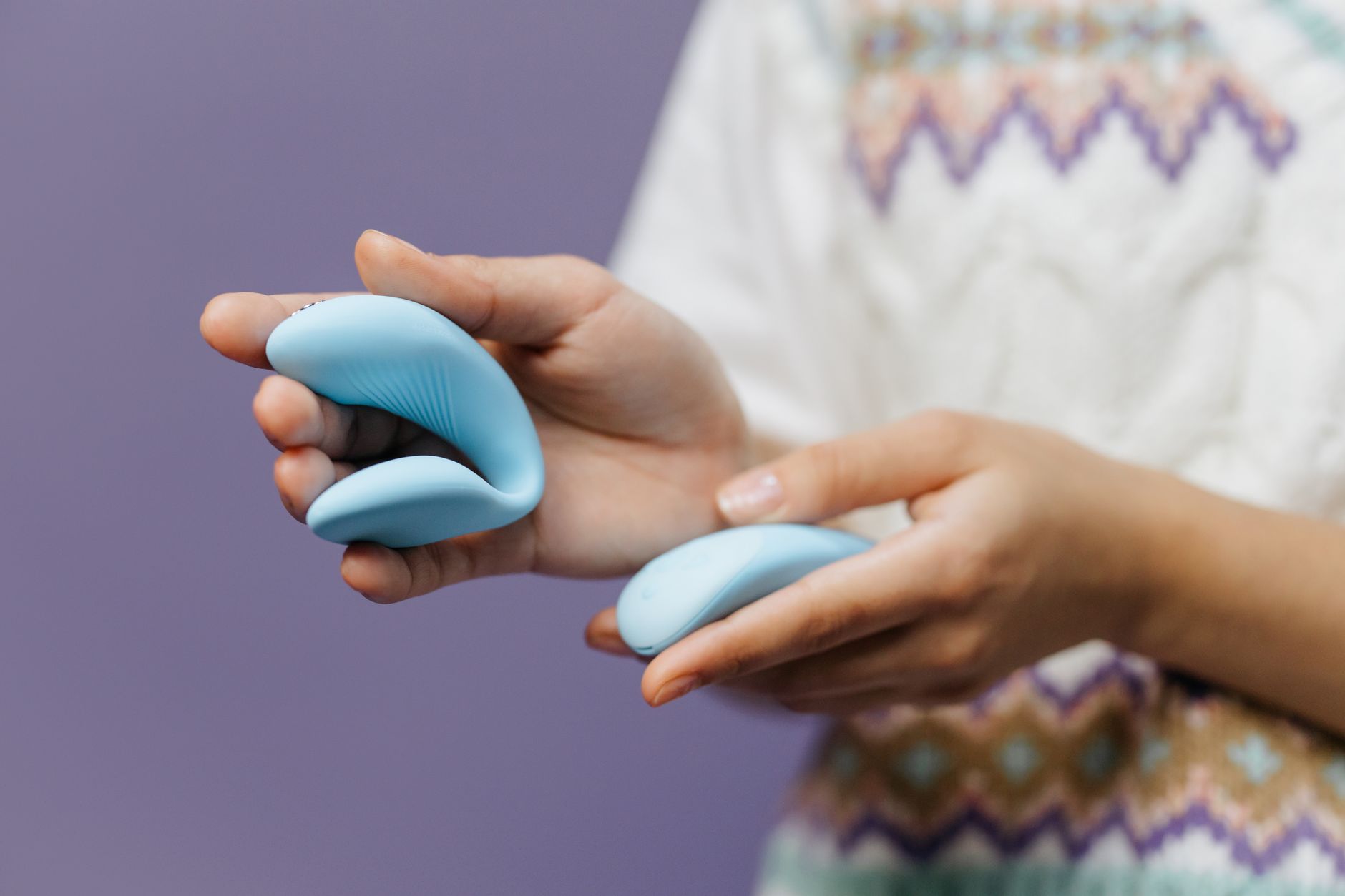
Here's the thing about introducing toys
It's not actually about the toy. It's about what you're saying when you bring it up. Most people stumble because they accidentally frame it as "our current sex life needs fixing" when what they really mean is "I want us to explore something together." Those two messages land completely differently, and your partner will hear whichever one you accidentally send.
I've worked with hundreds of couples navigating this conversation, and the ones who do it well share one thing in common. They separate logistics from emotion. They pick the right moment. They use language that feels collaborative instead of corrective. And they're honest about why they actually want to do this.
Why the timing and framing matter so much
There's a magical window for this conversation. It's not during sex, not right after, and not when either of you is stressed, tired, or distracted. The best time is when you're both relaxed, fed, and sitting down together for real conversation. Some couples do this over coffee. Others during a walk. The venue matters less than the fact that you're giving it actual attention.
What really matters is how you frame it. If you lead with "I've been thinking about trying something new together in bed," that's collaborative. If you lead with "I read that vibrators help with orgasms," that can sound like you're problem-solving his or her performance. Context is everything.
Photo by cottonbro studio on Pexels
The script that actually works
Honestly though, here's what lands:
"I've been thinking about our sex life, and I really like it. I also know there are things we haven't explored yet, and I'm curious about trying them with you. I saw this clitoral vibrator called the Lem, and I think it could feel amazing for both of us. I'm bringing it up now because I want your genuine reaction, not because I'm unhappy or trying to fix anything."
Notice what's happening here. You're saying:
- You're satisfied with the foundation.
- You want exploration, not correction.
- You've done some research and have something specific in mind.
- You value their input.
- You're being transparent about your timing.
That's a complete thought. It doesn't leave room for defensiveness because there's nothing to defend against.
What to expect as a response
Your partner might say yes immediately. They might need time to think about it. They might have concerns about size, sensation, whether it means something about their ability to satisfy you, or whether they'll feel replaced. All of those feelings are normal. The key is not to dismiss them.
If they're worried it means you're unsatisfied, you can say plainly: "This isn't about what you do or don't do. It's about adding something to what we already have. Like the difference between loving Italian food and also wanting to try Thai."
If they're concerned about sensation, you can talk through that together. Clitoral vibrators like the Lem provide a completely different type of stimulation than hands or other methods. It's not a replacement. It's a different tool.
Positioning it as "us" not "you"
One of the biggest mistakes I see couples make is assuming the clitoral vibrator is only for one partner's pleasure. Yes, technically, if you have a vulva, you're the one receiving direct clitoral stimulation. But the experience is fundamentally shared. Your partner gets to watch you experience pleasure. They get to control the settings and learn what you respond to. They get to be part of something new and intimate together.
When you frame it that way, it shifts from "I want this for me" to "I want us to explore this together." That distinction changes the entire conversation.
The logistics conversation that comes next
Once your partner is on board, the practical stuff matters. This is where you talk about when you'd use it, how often, and whether it would be part of partnered sex or solo exploration or both. Some couples use lemon clitoral vibrators only together. Others incorporate them into solo play in between partnered encounters. There's no wrong answer.
You might also want to talk about comfort levels around sharing the experience. Some people love watching their partner use a vibrator. Others prefer more privacy. That's a conversation too, and it's worth having explicitly.
How to handle hesitation or pushback
If your partner seems uncomfortable, the instinct is usually to drop it and move on. But sometimes hesitation just means they need more information or more time. You might ask: "What concerns you most about this?" and actually listen. Is it anxiety about performance? Worry about hygiene? Concern that it will be weird? Each of those has a different answer.
You might also offer to <a href="/blog/why-clitoral-suction-toys-work-better-than-traditional-vibrators-for-sensitivity-after-35">learn more together about how clitoral vibrators actually work</a>, so it feels like shared research instead of you bringing a fully formed plan that your partner has to decide about in real time.
If your partner says no, that's their boundary and it deserves respect. But you can also ask if it's a permanent no or a "not right now" situation. Sometimes people need time to warm up to an idea.
Creating the actual moment
Assuming you both agree to move forward, the first time you use a lemon clitoral vibrator together doesn't need to be performance. It can be playful. It can be experimental. It can be "let's see what this feels like" without any pressure to reach any specific outcome.
Some couples like to have it present during partnered sex and use it together as part of foreplay or for added stimulation during penetration. Others <a href="/blog/how-to-use-a-lemon-vibrator-when-you-want-sensation-without-pressure">prefer sensation without pressure</a>, meaning they use it separately as a way to explore what feels good without the demand of coordinated intimacy.
The first time, keep expectations low. You're not trying to prove anything. You're just exploring together.
What often shifts after you introduce a vibrator
Couples who successfully integrate lemon clitoral vibrators into their sex lives often report that the conversation about toys itself becomes easier. Once you've had one honest talk about pleasure and exploration, the next conversation is less loaded. You've already shown your partner that you're willing to talk openly about what you want.
That foundation of communication often spills into other areas. Couples become more likely to talk about frequency, fantasies, boundaries, and what's working and what isn't. The vibrator becomes a gateway to deeper conversations, not just a sex toy.
A note on vulnerability
Bringing up anything new in the bedroom requires vulnerability. You're saying something that could theoretically be rejected. Your partner could judge you. They could say no or make it weird. All of that's theoretically possible, which is why a lot of people don't have this conversation at all.
But the flip side is that showing up honestly, asking for what you want, and inviting your partner into exploration together is its own kind of intimacy. It says "I trust you enough to risk this." Most partners respond to that trust with openness, not rejection.
When to loop in professional support
If you've tried to have this conversation and it exploded, or if there's been sexual trauma or a history of coercion in your relationship, this might be a conversation worth having with a couples therapist first. Some things need more support than a script. A therapist can help you both understand what's underneath the hesitation and build a foundation for this conversation to actually land.
Same goes if your relationship is already struggling around intimacy and sex. Introducing a new toy won't fix a broken communication pattern. But working on the communication first, then exploring new tools together, often creates real change.
FAQ
What if my partner thinks the vibrator means I'm not attracted to them?
That's a real concern that shows up a lot, especially early in relationships or after trust has been shaken. The antidote is specificity and reassurance. You might say something like: "You're incredibly attractive to me, and that hasn't changed. This is about adding variety to what we already have, not about replacing what you do." Then show that through your actions. Use the vibrator together. Make sure your partner stays involved and valued.
Should I introduce the idea with a physical toy present or just talk about it?
Talk first. Don't surprise your partner with a vibrator sitting on the nightstand. That shifts the conversation into a defensive place. Have the talk, get agreement, maybe even go shopping together or browse options online as a couple. Then you can order or purchase it together. That makes it collaborative from the start.
What if I'm embarrassed to say I want to use a lemon clitoral vibrator?
That's normal, and it usually fades after the first conversation. You might frame it as: "I'm a little embarrassed to bring this up, and I'm going to do it anyway because I trust you and because I think it would be good for us." Naming the embarrassment often neutralizes it. Your partner will likely appreciate your honesty.
Is it weird to use a clitoral vibrator if I have a vulva and my partner doesn't?
Not at all. That's one of the most common setups. Clitoral vibrators provide stimulation that hands alone can't, and many people with vulvas need that type of stimulation to orgasm. Using a toy doesn't mean your partner isn't good at sex. It means you're using a tool designed for a specific type of pleasure. That's smart, not weird.
How do I bring this up if we've never talked about sex before?
Start smaller. Build the conversation gradually. Maybe begin by asking your partner what feels good, what they'd like to explore, what they're curious about. Get comfortable talking about sex in general first. Then introduce the idea of a specific tool. If you've never had a real sex conversation, this might be the moment to start.
What if introducing a vibrator creates jealousy or insecurity?
That's sometimes a sign that there's other stuff underneath that needs attention first. Jealousy about a toy often points to larger questions about desirability, performance, or trust. Those conversations are worth having with or without the vibrator. A couples therapist can help you sort that. If it's just normal adjustment, most couples settle into comfort within a few uses.
The bottom line
Introducing a lemon clitoral vibrator to your partner is a conversation about vulnerability, curiosity, and trust. It works when you frame it as exploration rather than correction, when you pick a good moment, and when you actually listen to your partner's concerns. Most importantly, it works when both of you approach it together, as a team, rather than one person selling the other on an idea.
Start with honest conversation. Show up vulnerable. Listen to what your partner says back. And know that the conversation itself—not the toy—is often the most connecting part.
Ready to have a real talk about pleasure and exploration with your partner? <a href="/contact">Reach out to us</a> if you want guidance on navigating these conversations in your relationship.