
Let's start with the awkward part
One of you wants sex more often. The other doesn't. You've probably already had the conversation about it, and it probably didn't go great. Maybe it felt like blame. Maybe it felt like rejection. Maybe you both just stopped bringing it up and now there's this quiet ache underneath everything.
Here's what I've learned after years of working with couples: this imbalance isn't a problem with your relationship. It's a problem with how you're trying to solve it.
A lemon vibrator, used thoughtfully, can shift the entire dynamic. Not by forcing desire to match up, but by creating a third option that doesn't require both partners to want the same thing at the same time.
Why mismatched arousal feels like rejection (even though it isn't)
The partner with higher desire often feels unwanted. The partner with lower desire feels pressured. Both are right. And both are exhausting because you're caught in a loop where intimacy becomes negotiation, and negotiation becomes resentment.
What makes this worse is that most couples treat mismatched desire like a problem one person has. "My partner doesn't want me enough." "My partner pushes too hard." You spend energy trying to fix the person instead of redesigning the system.
A clitoral vibrator, specifically something like a lemon sucker or lem vibrator with air-suction technology, changes the equation. It lets the partner with lower desire experience pleasure on their own timeline. It lets the partner with higher desire have an outlet that doesn't depend on someone else's arousal clock. And it gives you both a reason to be in the same room, wanting the same thing.
The conversation before you bring it into bed
Don't just show up with a lemon sexual toy and hope they get it. That'll backfire. Instead, have this conversation when you're both dressed, caffeinated, and not trying to have sex.
Start here: "I know our desire doesn't match up right now. I don't think that's either of our faults. But I think we're solving it wrong. Instead of trying to make you want it more or me want it less, what if we just... did it differently?"
Then talk about what "different" could look like. Maybe the higher-desire partner uses a lemon vibrator solo while the lower-desire partner watches, or touches them, or just sits nearby. Maybe you use it together but without the pressure for it to lead to sex. Maybe it's something you take turns initiating, and the person with lower desire gets to say "not today" without it becoming a thing.
The key: frame it as a solution for both of you, not a workaround for their lack of interest.
How to actually use it without making things weird
Start small. The first time you bring a clitoral vibrator into shared intimacy, don't make it the main event. Use it during foreplay when you're already touching each other. A lem vibrator's gentle suction feels less aggressive than traditional vibration, so it can work even when arousal is low.
If your partner has lower desire, they might appreciate that suction-based clitoral vibrators like the Lemon work without requiring them to be fully aroused first. The sensation can actually build arousal rather than demanding it upfront.
For the partner with higher desire, using a lemon vibrator solo while your partner is present (even if they're not touching you) can feel incredibly intimate. You're being vulnerable. You're showing them what feels good. You're not asking them to perform desire they don't feel.
Then there's the middle ground: you use the vibrator while they participate however they want. Some partners love using it on their significant other. Some like to watch. Some prefer to just be present. All of these are valid, and none of them require matching arousal schedules.
When one partner feels left behind
Honestly? This happens. The person with lower desire might worry that the vibrator means they're not enough. The person with higher desire might feel like they're settling for a toy instead of their partner's genuine interest.
Both of these feelings need to be named and addressed directly. This isn't about replacing each other. It's about making space for desire to exist without becoming a source of shame or pressure.
One small thing that helps: talk about what happens before and after. The vibrator is just the middle. What's the intimacy around it? Do you cuddle afterward? Do you talk? Do you look at each other? The lemon clitoral vibrator works best when it's wrapped in genuine connection, not when it's the only connection happening.
The unexpected benefit: it might actually increase desire
Here's something that surprises couples: when the lower-desire partner stops feeling pressured, their desire sometimes comes back. Not always. But often. Because a lot of what kills desire isn't low libido, it's the anxiety of being asked to perform something they don't feel.
When you remove the demand and just create the space, something shifts. The partner with lower desire might start initiating using the lemon sexual toy with you. They might find that suction-based clitoral vibrators feel different from what they expected. They might discover that pleasure feels better when there's no expectation attached.
This isn't guaranteed. Some desire imbalances are about hormones, stress, medications, or just natural differences in libido. But a shocking amount of them are about pressure and shame. And both of those things evaporate when you stop treating arousal like a problem to solve and start treating it like a conversation to have.
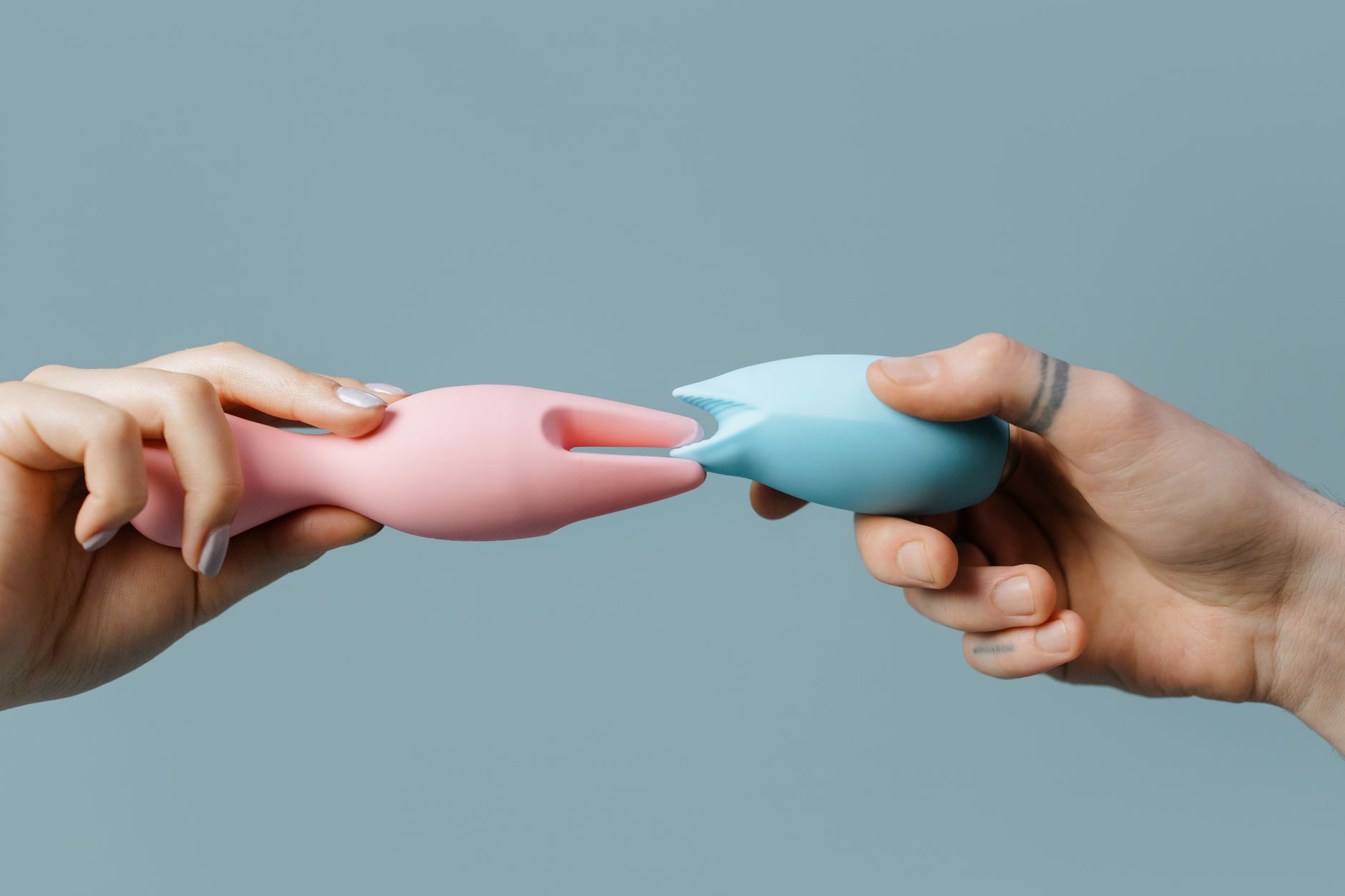
Photo by cottonbro studio on Pexels
When mismatched desire is about something deeper
Sometimes arousal imbalance is a symptom of something else. Resentment. Disconnection. Unresolved conflict. A partner who feels taken for granted. The vibrator won't fix any of that. You need actual conversation, maybe therapy, maybe time.
But if the imbalance is just... a difference in how often you want sex, and you're both willing to work with it instead of against it, a lemon vibrator can be genuinely transformative. It gives you a third lane. It lets desire exist without performance. And it reminds you both that pleasure doesn't have to look the way you thought it would.
If you find you need more support navigating this together, reaching out to a relationship counselor can help you build the communication skills to talk about desire without blame.
What to avoid (the things that make it worse)
Don't use the vibrator as punishment. "Fine, I'll just use this instead of asking you." Don't hide it or sneak it. Don't frame it as a temporary fix until the lower-desire partner "comes around." Don't make it transactional, like you're owed something in return.
Don't compare what works for one couple to what should work for you. Some partners want to use lemon sexual toys together constantly. Some couples are fine using them solo. There's no hierarchy here. What matters is that you both agreed to it and you're both getting something out of it.
The lem vibrator is a tool. Like any tool, it only works if you're both using it intentionally.
FAQ: Mismatched Arousal and Vibrators
How do I know if a lemon vibrator will actually help our relationship?
It's worth trying if you're both open to it and if the imbalance is just about frequency or desire levels, not about deeper resentment or disconnection. If you're using the vibrator hoping it'll fix a broken relationship, it won't. But if you're using it as part of rebuilding intimacy, it can be incredibly helpful.
What if my partner thinks introducing a vibrator means I'm not satisfied with them?
That's a conversation, not a reason to skip it. Start by saying something like, "I love you and I want to feel close to you. Our desire doesn't match right now, and that's not your fault. I want to find a way that works for both of us." Make it clear that the vibrator is about solving a system problem, not about their inadequacy.
Can we use a lemon clitoral vibrator if we're not comfortable talking about sex much?
The vibrator might actually make the conversation easier. Sometimes it's less scary to introduce something physical and then talk about it afterward. But yes, the conversation does need to happen. You can't skip straight to using it and expect it to feel good if there's shame or avoidance underneath.
What if only one of us wants to use the vibrator and the other doesn't?
That's fine. Solo use is completely valid. The partner who wants to use a lemon vibrator can do that privately, and it might actually take pressure off the partner who doesn't want to engage with toys. Everyone gets what they need without negotiating.
How long does it take before mismatched arousal feels less painful?
It depends on what's causing it. If it's just a difference in libido, introducing a vibrator and the communication around it can help within a few weeks. If it's connected to deeper issues, it might take months of consistent conversations and maybe some professional support. Be patient with yourself and your partner.
Is using a lemon sexual toy together different from using it solo?
Completely different experience. Using it together means vulnerability and presence. Using it solo means flexibility and independence. You probably need both, at different times, for different reasons.
The real thing happening here
Mismatched desire doesn't mean your relationship is broken. It means you're two people with different bodies, histories, and appetites, trying to build something together. That's the deal. Sometimes your timelines align. Sometimes they don't.
When they don't, you get to choose how to respond. You can treat it like a problem or a puzzle. A failure or a redesign. A lemon vibrator, a lem vibrator, or any clitoral vibrator works best when you're choosing the latter. When you're both looking at the problem and asking, "How do we want to solve this together?" instead of, "Why aren't you like me?"
That's where the real intimacy lives. Not in matching desire. In matching effort. In showing up and saying, "I want this to feel good for both of us, and I'm willing to figure out what that looks like."
That's always the conversation worth having. The vibrator is just permission to have it.