Let's name what's actually happening
Desire doesn't vanish. It gets quiet. Then one day you notice it again, and the first thought isn't always "Great." It's often "Wait. Is that... weird?" That's not a sign something's wrong. That's your brain recognizing that pleasure feels unfamiliar after a break, and honestly, some caution around unfamiliar territory is normal.
What you're experiencing is a genuine neurological reset. Your brain's arousal pathways haven't forgotten how to work. They've just been idle. When desire starts stirring again, it can feel almost like meeting an old version of yourself you're not quite ready for. That dissonance matters, and it's worth understanding before you reach for anything.
Why desire feels strange when it returns
When you haven't had sex or experienced arousal for weeks, months, or longer, three things happen in the body and mind simultaneously.
First, the neural maps your brain built around pleasure get quieter. You haven't been rehearsing that particular choreography, so when signals fire again, they feel less automatic, less you. Second, your tolerance for stimulation recalibrates. What felt "medium" before might now feel too much or too subtle. It's like putting on glasses after taking them off. Third, there's often an emotional layer. If the gap was due to relationship strain, trauma, grief, or hormonal shifts, desire's return can feel complicated. You might want it intellectually but feel hesitant physically. Or the reverse.
This is where most people make a mistake. They assume the hesitation means something's broken. It doesn't. It means your body is being smart. It's asking for a gentler reintroduction, not a full sprint back to where you left off.
The reintroduction protocol
If you're using a partner-based vibrator or planning to involve someone else, the first step isn't sex. It's conversation. Tell your partner that desire is returning, but it feels unfamiliar, and you want to move slowly. Not because anything's wrong with them. Because you're getting reacquainted with yourself.
Then, solo first. Before involving a partner, spend time alone with your body and a clitoral vibrator. This gives you three things you can't get otherwise: zero performance pressure, a chance to learn what your current baseline is, and time to rebuild the neural pathways without the cognitive load of someone else's presence.
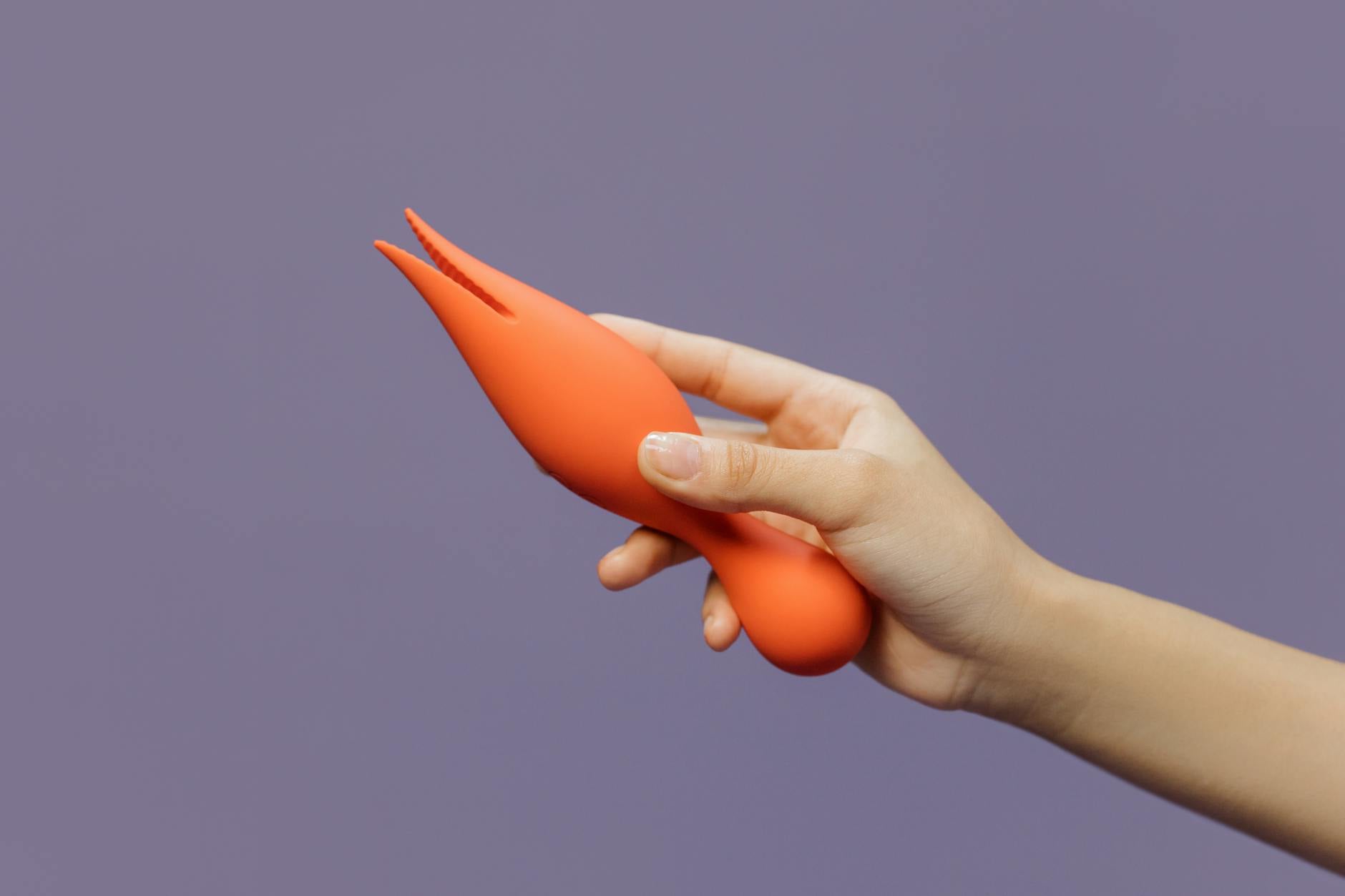
Start with your lemon vibrator on its lowest setting. Yes, the lowest. The Lemon's range is specifically designed so that you're not jumping from "off" to "intense." You can literally start at barely-there and build. Spend time at each level. Ten minutes on pattern 1. Then 2. Notice what you feel without trying to get anywhere. Arousal doesn't need a destination right now. It just needs acknowledgment.
What slow reintroduction actually looks like
Here's a framework that works: three sessions, separated by at least a day.
Session one: Use your lemon vibrator for 5-10 minutes on levels 1-3. No pressure to orgasm. The goal is simply "I can feel this, and it's pleasant." Stop whenever. Most people find that after a break, 10 minutes is enough. Your nervous system doesn't need proof. It needs permission.
Session two (24 hours later): Extend to 15 minutes. Move through the levels more intentionally. If something feels good at level 2, stay there longer. Your body will start sending clearer signals about what it wants. This is your brain and body re-establishing trust.
Session three: Give yourself 20-30 minutes and explore whether orgasm happens naturally. Don't chase it. If it does, great. If it doesn't, also great. You're not testing whether you still can. You're testing whether the pathway feels open and available again.
Many people find that by session three, desire feels less foreign. Not fully familiar yet. But less strange. That's exactly right.
When you're ready to involve a partner
If you have a partner waiting in this picture, the transition matters. Don't go directly from solo exploration to partnered sex. Add a middle step: partnered play without intercourse.
Use your lemon clitoral vibrator together. Have them hold it, or have you hold it while they touch you elsewhere. The reason this works is that you get partnership, physical touch from someone you trust, and continued focus on clitoral pleasure. You're not switching from solo sensation to full partnered sex. You're building a bridge.
This also gives your partner real-time information about what your body responds to now. Arousal is different after a gap. What worked before might not anymore. Using a clitoral vibrator together lets them learn this without guessing or you having to narrate it awkwardly.
Talk before, during, and after. "This feels good" or "Can you try lower on my thigh?" or "I need to slow down" are all sentences that make this work. Your partner isn't a mind reader. But they don't have to be. They just need information.
The role of a lemon vibrator specifically
Why mention lemon clitoral vibrators at all? Because suction-based toys like the Lemon work differently than traditional vibrators after a break, and that matters.
Traditional vibrators buzz consistently across the tissue. That can feel overwhelming if your nerve endings are recalibrating. Suction-based lemon adult toys create a gentle pulse that stimulates without the same intensity level. You get the benefit of hands-free, controllable stimulation without the risk of overstimulation. It's like the difference between a handshake and a hug. Both are contact. One is softer.
The lemon suction toy also means you're not relying on consistent pressure from a partner's hand or traditional penetration. You can adjust intensity yourself, pause easily, and the sensation is more about consistent gentle rhythm than force. That's exactly what a nervous system needs when it's welcoming pleasure back.
Common things that happen (and why they're normal)
You might feel very little the first time. That's not failure. Your brain is literally running a diagnostic. Give it permission to do that slowly.
You might feel a lot and then nothing the second time. Arousal isn't linear. Sometimes your body is ready. Sometimes it needs another day. Both are information, not setbacks.
You might have an orgasm and feel sad afterward. This is real and actually pretty common. You're releasing a lot of emotion at once. You've just proved to yourself that pleasure is still possible after a gap. Sometimes that hits something. Cry if you need to. Sit with it.
You might have an orgasm and feel absolutely nothing. Like your body did the thing but your mind wasn't there. Again, normal. Your nervous system and your mental state are still syncing up. Keep going gently. They'll reconnect.
When to stop waiting and see someone
Here's the line: if after two weeks of gentle, solo exploration with your lemon vibrator desire hasn't stirred at all, or if arousal triggers physical pain, talk to a doctor. Not because something's necessarily wrong. But because you deserve to know. Pain during arousal after a gap can signal anything from residual trauma responses to hormonal shifts to pelvic floor tension. A pelvic floor physical therapist or a trauma-informed therapist can help you sort it.
Also worth a conversation with a therapist if the gap was due to relationship distance, betrayal, or grief. Sometimes desire doesn't come back on its own timeline. Sometimes it needs permission that comes from processing what happened. That's not something a vibrator fixes alone. That's something you fix with support.
The bigger picture
Desire returning but feeling unfamiliar is actually a gift, even though it doesn't feel like one. It means you're meeting yourself fresh. It means you get to learn what your body wants now, not what it wanted before. People who navigate this gently often find that desire that comes back feels more chosen than it did the first time around. Less automatic. More intentional. That changes everything about how it feels.
Use your lemon vibrator. Use it slowly. Use it by yourself first. And give yourself permission to let this unfold on your actual timeline, not some imagined schedule. Your body knows what it needs. You're just learning to listen to it again.
FAQ: Desire after a break
How long does it usually take for desire to feel normal again after a long break?
There's no universal timeline, but most people report that after two to four weeks of gentle, regular solo exploration, desire starts to feel less strange and more like it's theirs again. The key is consistency and low pressure. Your nervous system is rebuilding a pathway. That takes repetition, not intensity. If you're using a lemon vibrator two to three times a week, you're usually looking at 4-6 weeks before arousal feels fully integrated back into your sense of yourself.
Is it normal to feel disconnected from pleasure even when your body is responding?
Completely. Arousal has two systems: the physical (blood flow, lubrication, muscle response) and the mental (focus, desire, connection to sensation). When you've been away from sex, these systems can desynchronize. Your body might be responding while your mind is still skeptical. That's not dysfunction. That's your brain and body taking slightly different speeds to reconnect. Keep using your lemon clitoral vibrator, but pair it with grounding practices: deep breathing, paying attention to sensation rather than outcome, maybe music or a scent you like. The mind catches up.
Can using a lemon vibrator reignite desire faster than just waiting?
Yes, but not because it's magic. Because it's active engagement. When you use your lemon adult toy intentionally and without pressure, you're sending a signal to your nervous system: "Pleasure is safe here." Your brain learns faster through repetition than through waiting. That said, speed isn't the goal. Integration is. A vibrator that helps you reconnect gently is more valuable than anything that tries to rush the process.
What if I'm using a lemon vibrator and I still can't orgasm after weeks of trying?
First, check whether you're still putting pressure on yourself. "I should be able to orgasm by now" is pressure. Orgasm might take longer to return than arousal. That's not failure. Some people find that their orgasm response takes weeks longer to wake up than their basic arousal. If you're genuinely stuck after six weeks of regular, pressure-free exploration, a pelvic floor physical therapist or sex therapist can help you figure out whether there's a physical or psychological block. Sometimes that's needed.
Is it okay to involve a partner right away or do I need to figure things out solo first?
Solo first. Not forever. But at least a few sessions. When you know what your own baseline is, involving a partner is easier and more connected. You can tell them what you're discovering rather than both of you guessing together. That clarity makes partnered exploration feel better for everyone. After you've spent time alone with your lemon vibrator and feel somewhat confident about what your body is responding to, then bring them in.
What if desire returns but it doesn't feel like it's "mine"? Like, it feels obligatory?
Stop. That's your nervous system telling you something important. Obligatory desire isn't really desire. It's performance. If you're feeling like you "should" be aroused because your partner wants to be intimate or because you feel like you owe the relationship something, that's worth examining. Sometimes talking to a therapist helps untangle whether this is a normal adjustment period or whether there's a deeper relationship issue. Sometimes stepping back from physical exploration for another week gives your mind the space to figure out what's actually yours. Trust that signal.
You don't have to rush this
Desire returning feels like it should be a celebration. Sometimes it is. Sometimes it's complicated. Both are okay. Use your lemon vibrator as a tool to explore at your own pace, not as a way to prove something to yourself or anyone else. Your pleasure matters. And so does the process of getting there.
If you're feeling stuck or uncertain about any of this, you don't have to figure it out alone. Reach out to us and we can point you toward resources that might help.