Let's talk about postpartum bodies
Pregnancy and childbirth reshape your entire body from the inside out. Your pelvic floor gets stretched, your hormones plummet, and your tissue loses elasticity and thickness. That's not a metaphor—those are measurable physiological changes. What this means for pleasure is simple: the toy that felt amazing before isn't going to feel the same way after, and that's completely normal.
Most people assume they can just go back to whatever device they used before. They can't. And the reason isn't weakness or damage—it's that postpartum tissue is genuinely more delicate, more sensitive, and responds differently to direct stimulation.
That's where lemon vibrators change everything.
How pregnancy and birth change your pelvic anatomy
Let's start with what actually happens physically. During pregnancy, your pelvic floor muscles stretch to accommodate a growing baby. Childbirth—whether vaginal or cesarean—triggers further tissue remodeling. Your vulva, clitoris, and vaginal opening all experience temporary (sometimes longer-lasting) swelling, thinning, and loss of elasticity.
Even if you had an "easy" delivery or a planned cesarean, the hormonal shift alone changes everything. Estrogen drops drastically after birth, especially if you're breastfeeding. Lower estrogen means thinner vaginal tissue, reduced natural lubrication, and a clitoris that's more sensitive to direct pressure—not necessarily in a good way. It can feel raw, overstimulated, or even painful.
Most traditional vibrators use direct oscillation. That means they press directly against your tissue and vibrate. For a postpartum body, this often feels too intense, too sharp, or irritating. The vibration can feel like buzzing against raw skin rather than the pleasure you're looking for.
Why lemon vibrators work differently
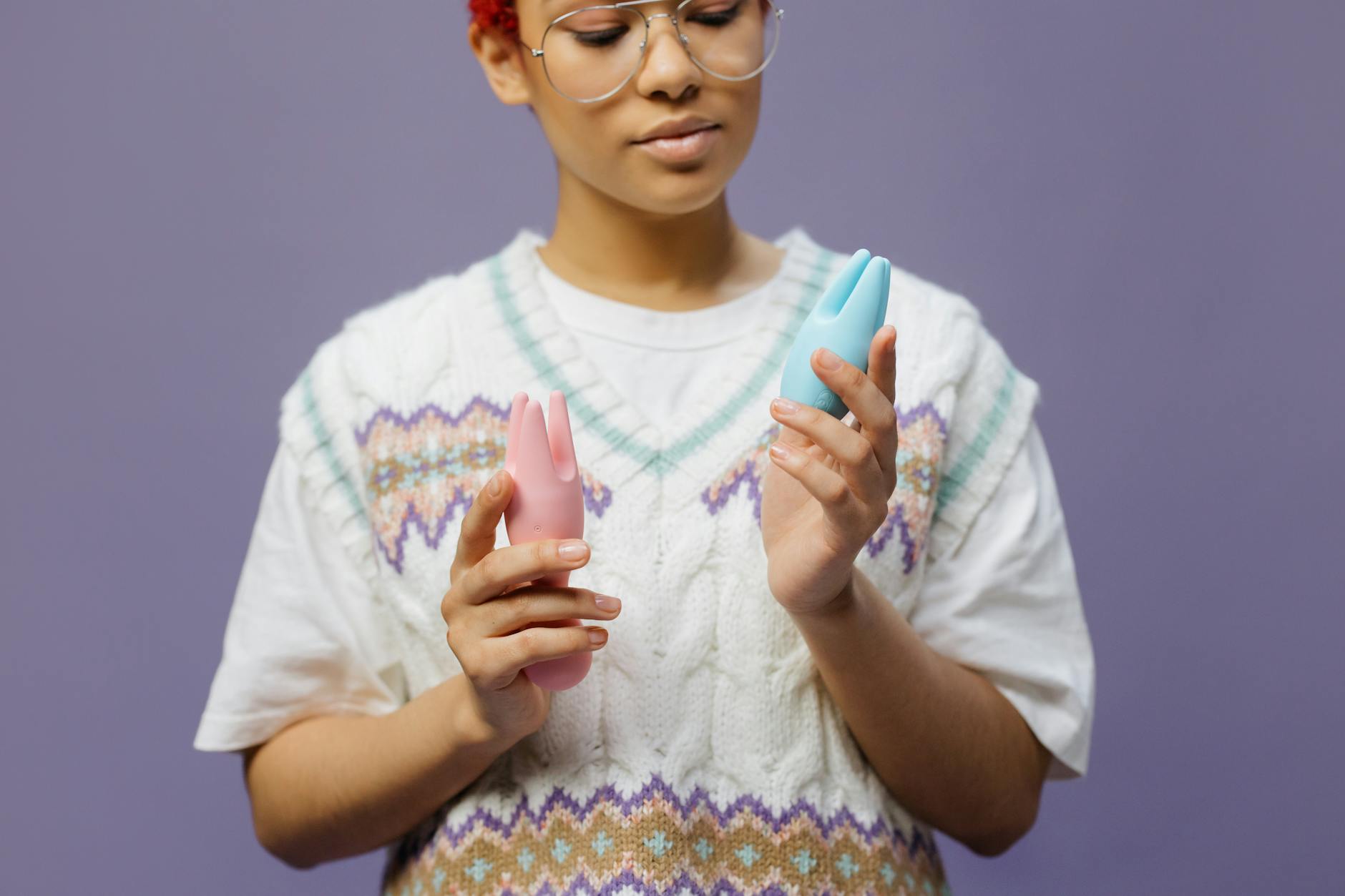
Lemon vibrators like the Lem use air-suction technology instead of traditional vibration. Instead of pressing and buzzing, they create gentle pulsing suction around the clitoris. The sensation is rhythmic and indirect—your tissue isn't being vibrated directly; it's being gently pulled and released.
For postpartum bodies, this matters enormously. Air-suction doesn't require the tissue to tolerate intense, sustained contact. It works with your sensitivity rather than against it. You're getting stimulation, but distributed across the surrounding tissue rather than concentrated on one spot.
The other advantage: you have complete control over intensity. Start at the lowest setting and build up gradually. With traditional vibrators, "low" can still feel too direct. With a lemon clitoral vibrator, pattern one might be barely perceptible—a gentle rhythm that wakes things up without overwhelming them.
The timeline matters more than you think
If you've just had a baby—say, within the last 6 to 8 weeks—your body is still actively healing. Most healthcare providers recommend waiting 6 weeks before any vaginal penetration, but external pleasure play can often resume earlier if you feel ready and pain-free.
Here's the thing though: ready physically doesn't always mean ready emotionally. Postpartum bodies come with postpartum brains. Sleep deprivation, hormonal crashes, identity shifts, and the weight of new responsibility can make pleasure feel inaccessible. That's separate from the tissue changes, but it's real.
If you're past the 8-week mark and your body feels healed (no pain, no bleeding, cleared by your provider), lemon vibrators become a smart choice because they accommodate the tissue changes without requiring you to be in a particular emotional state. You don't need to be fully aroused for air-suction to feel good. You can explore at your own pace.
Lubrication becomes non-negotiable
Before pregnancy, you might have gotten away without lube. After pregnancy, especially if you're nursing, forget it. Your natural lubrication is lower because of estrogen. This isn't a sign of low desire—it's chemistry.
With lemon vibrators, always use water-based lubricant. It reduces friction, makes the suction sensation smoother, and protects your more delicate tissue. Apply it generously. This isn't being cautious; it's being smart.
Silicone-based lubes feel richer and last longer, but they can damage silicone toys. Stick to water-based for your lemon vibrator, and reapply as needed during use.
The pelvic floor factor
Your pelvic floor just spent months supporting a baby's weight and then contracting hard during labor (or being cut and stitched during cesarean recovery). Even if you didn't tear, the muscles are tired. Even if you had a planned cesarean with no labor, your pelvic floor changed during pregnancy and is now healing.
Many people jump into Kegel exercises too soon, thinking they need to "get strong" again. Sometimes what your pelvic floor actually needs is permission to relax. Tension in that area can make pleasure feel blocked or uncomfortable.
When you use a lemon clitoral vibrator, you're not working against pelvic floor tension the way you might with a traditional vibrator that requires a certain level of arousal to feel good. Air-suction stimulation can feel pleasurable even when your pelvic floor is still in recovery mode. This gives your body time to gradually relax and reconnect.
Partnered pleasure after birth
If you have a partner, lemon vibrators are also less intimidating to introduce during postpartum recovery. They're clearly different from penis or fingers, so there's less performance pressure. Your partner can hold it, control the intensity, and focus on your pleasure rather than their own—which often matters more in the postpartum window when you're exhausted and touched out.
Using a lemon vibrator together can also help your partner understand what feels good right now, which is different from what felt good before birth. Your sensitivity map has shifted. A toy that doesn't require deep knowledge of your body (like traditional vibrators sometimes do) makes exploration easier and lower-pressure.
When to seek help
If you're experiencing pain during pleasure, don't power through it. Postpartum pelvic pain is real and treatable. A pelvic floor physical therapist can assess whether tension, scar tissue, or other factors are getting in the way. This is especially true if you had a tear, episiotomy, or cesarean delivery.
If you had significant tearing or an episiotomy, your provider might recommend waiting longer before any external stimulation. Follow their advice. When you do resume, lemon vibrators are often the gentlest entry point because they work with sensitivity rather than demanding arousal first.
The bigger picture
Postpartum recovery is not just physical. It's emotional, relational, and psychological. Reclaiming pleasure after birth—on your own terms, in your own timeline—is part of reclaiming your body. That doesn't mean forcing yourself to feel sexy when you're touched out and exhausted. It means having options that work for where you actually are right now.
Lemon vibrators meet you there. They work with a postpartum body's sensitivity. They don't require deep arousal to feel good. They're controllable, gentle, and designed for the exact tissue changes you're experiencing. They're not a Band-Aid for bigger emotional stuff, but they're a practical tool that honors your body's current state.
Your pleasure matters. Even when you're in the thick of postpartum recovery. Even when everything feels touched out and impossible. Start small, use lube, go slow, and give yourself time. Your body will surprise you.
Frequently asked questions
How long after birth should I wait before using any kind of vibrator?
Most healthcare providers clear you for external pleasure after 6 weeks if you're not experiencing pain or bleeding. Internal penetration typically gets the same clearance, though some providers are more conservative. What matters more is how you feel. Pain is a sign to wait longer. If you're pain-free and cleared by your provider, external air-suction stimulation like a lemon clitoral vibrator can be a gentle way to reconnect. Listen to your body, not a timeline.
Will a lemon vibrator feel different if I'm breastfeeding?
Yes, it likely will. Breastfeeding suppresses estrogen, which means thinner, drier tissue and potentially less natural lubrication. Your sensitivity might be higher, and direct stimulation might feel uncomfortable. A lemon vibrator's indirect air-suction approach is often more comfortable during the breastfeeding phase because it doesn't require tissue to tolerate intense direct pressure. Using lube becomes even more important.
Can I use a lemon vibrator if I had a cesarean delivery?
Absolutely. Your external tissue has still changed from pregnancy hormones, even without vaginal delivery. The pelvic floor has still been under strain and is now recovering. A lemon vibrator works well for cesarean recovery because it's external, gentle, and doesn't require arousal to feel good. Wait until you're cleared by your provider and pain-free before any pleasure play, but once you are, air-suction vibrators are often more comfortable than traditional vibration.
What if I'm not interested in partnered pleasure yet but want solo exploration?
That's completely normal and valid. Solo exploration with a lemon vibrator is actually ideal for postpartum recovery. You can take your time, go at your own pace, and figure out what feels good without pressure or performance. You're not managing anyone else's needs or expectations. Start at the lowest setting, use plenty of lube, and stop if anything feels uncomfortable. Pleasure doesn't have to involve a partner.
Should I use numbing cream if my tissue is too sensitive?
No. Numbing cream masks pain rather than addressing it. If your tissue is too sensitive for any stimulation, that's a sign to give it more time or see a pelvic floor specialist. Pain during pleasure isn't something to numb—it's something to understand. A physical therapist can assess whether tension, scar tissue, or inflammation is the culprit and help you address it. In the meantime, a lemon clitoral vibrator at the lowest setting with plenty of lube is gentler than most alternatives, but if even that feels too intense, your body might need more recovery time.
Can I use the same lemon vibrator I used before pregnancy?
Yes, the toy itself is fine. Your body is what's changed, not the device. But you'll likely need to use it differently. Start at the lowest setting instead of where you used to start. Use more lube than you did before. Give yourself longer warm-up time. Your postpartum body is more sensitive and responds differently. The good news is that means you might discover new patterns or intensities that feel even better than before.
The path forward
Your postpartum body deserves pleasure. Not someday when you feel "back to normal"—because normal is shifting. Right now, in this phase, with the body you actually have. A lemon vibrator acknowledges that your tissue has changed and meets you there with gentleness and control. That's not settling. That's smart.
If you're ready to explore, start small, use lube, and give yourself permission to take your time. Your pleasure is worth it.
Have questions about choosing the right toy or getting started? Reach out to our team at Hello Nancy. We're here to help.